Move-Out Readiness Score
A real 50/30/20-style affordability score for moving out on your own · free, no signup
See Move-Out Readiness Score in action
Move-Out Readiness Score
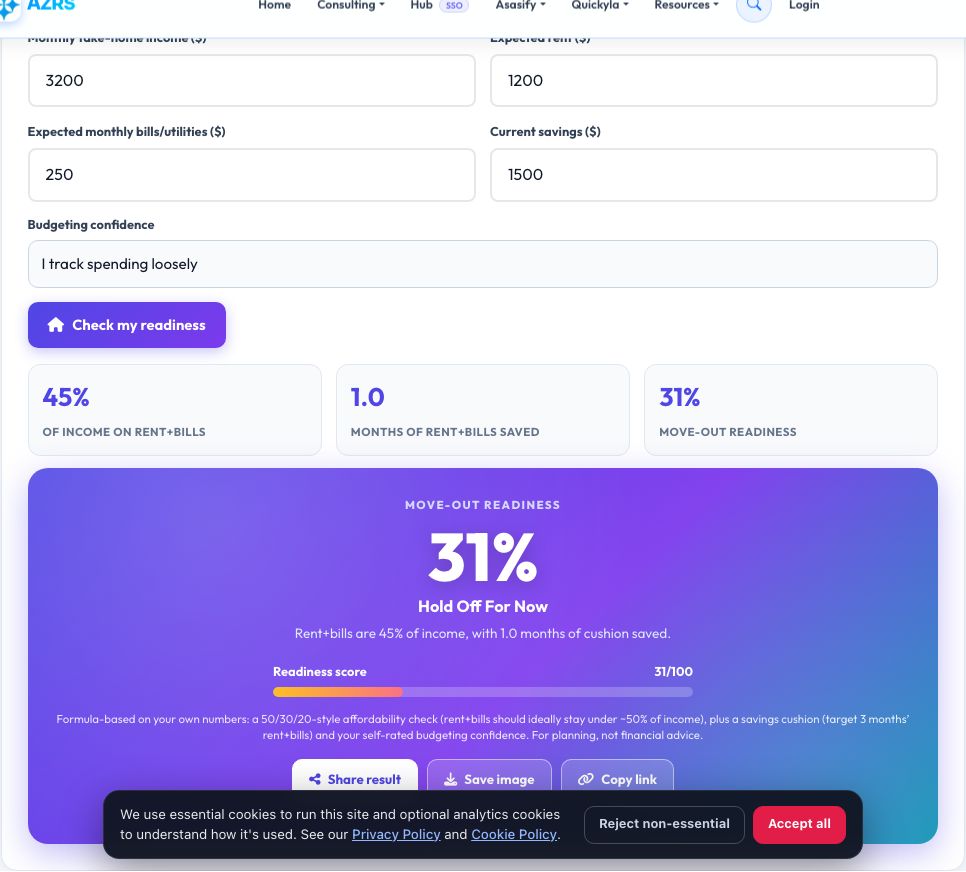
Enter your monthly take-home income, expected rent, expected monthly bills, current savings and your self-rated budgeting confidence. This tool blends a 50/30/20-style affordability check (rent and bills ideally under about half your income), a savings-cushion check (targeting roughly three months of rent and bills saved), and your confidence rating into a 0-100% readiness score.
Every input is shown back to you plainly — the rent-to-income ratio and months of cushion saved — so the score is fully auditable, not a black box.
Key features
50/30/20-style formula
A widely referenced affordability rule of thumb, applied to your numbers.
Savings cushion factored in
Targets roughly 3 months of rent and bills saved.
Budgeting confidence included
A self-rated factor blended into the final score.
Fully auditable
Rent-to-income ratio and cushion months are shown separately.
How to use it
- Enter your monthly take-home income.
- Enter expected rent and monthly bills.
- Enter your current savings.
- Rate your budgeting confidence and see your readiness score.
Worked example
Example
Income $3,200, rent $1,200, bills $250, savings $1,500 → rent+bills at about 45% of income with roughly 1 month of cushion, giving a moderate readiness score.
Who uses this tool
Anyone planning to move out
A real formula-based gut-check before signing a lease.
Parents helping a teen plan
A concrete, sharable number to discuss.
Roommates comparing budgets
See how ready each person actually is.
Tips for the best results
- Use your real take-home pay, not gross income, for an accurate ratio.
- Aim for rent and bills under roughly half your income as a starting rule of thumb.
- Build toward at least a few months of cushion before signing a lease if your score is low.
Common mistakes to avoid
- Using gross income instead of take-home pay, which overstates affordability.
- Forgetting utilities, renter's insurance or parking in the 'bills' estimate.
Why use AZRS QuickFix?
It is 100% free, needs no signup and has no watermark or usage limits. The tool runs in your browser, so what you type stays on your device, and it works on phones, tablets and desktops. New tools are added every week — bookmark this page or browse the full QuickFix toolbox.
Frequently asked questions
Is this real financial advice?
It's a formula-based estimate using a commonly referenced affordability rule of thumb, not personalized financial or legal advice.
What is the 50/30/20 rule?
A budgeting guideline suggesting roughly 50% of income to needs (like rent and bills), 30% to wants, and 20% to savings; this tool checks your needs ratio against that benchmark.
How much savings cushion should I have?
The score targets roughly three months of rent and bills saved as a reasonable safety net, though more is always safer.
Is my financial data stored?
No, everything is calculated locally in your browser.
Can my score be 100%?
Yes, with a low rent-to-income ratio, a strong savings cushion, and high budgeting confidence.
Can I share my score?
Yes, using the Share or Save image buttons on the result card.