NASA and ESA unveil Hubble's stunning image of globular cluster M30
NASA and the European Space Agency released a new Hubble image of the globular cluster Messier 30, showcasing its dense core and ancient stars, crucial for studying stellar evolution and dynamics in …
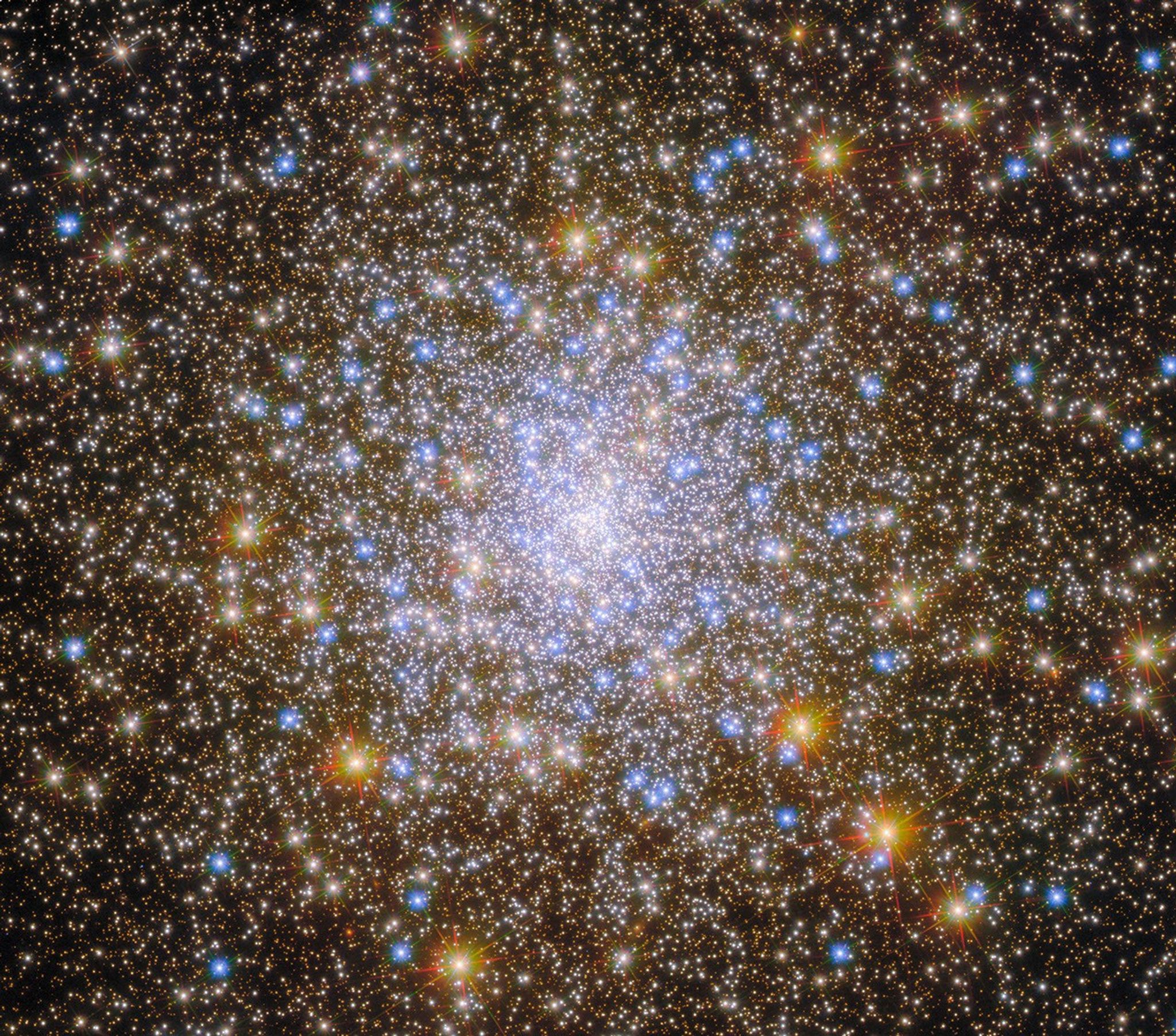
NASA and the European Space Agency released a new Hubble Space Telescope image of the globular cluster Messier 30 on Nov. 5, 2026, showing a dazzling concentration of ancient stars packed into a tight sphere. The picture, taken with Hubble’s Advanced Camera for Surveys, highlights the cluster’s dense core and a halo of sparkling stars that stretch for several light‑years. M30, catalogued by French astronomer Charles Messier in 1764, lies about 27,000 light‑years from Earth in the constellation Capricornus.
Astronomers say the image matters because M30 is a classic example of a core‑collapsed globular cluster, a rare stage in the life of these stellar families. The cluster’s stars are roughly 13 billion years old, making them some of the oldest objects in the Milky Way. Studying them helps scientists test models of stellar evolution and the dynamics of dense star systems. Recent advances in data from the Gaia mission and ground‑based spectrographs have revealed that M30’s core is contracting, a process that can trigger stellar collisions and the formation of exotic objects like blue stragglers and millisecond pulsars.
The new Hubble data provide unprecedented resolution of the cluster’s inner region, allowing researchers to count individual stars down to a tenth of a solar mass. Dr. Elena Rossi of the Space Telescope Science Institute noted that the image confirms predictions of a steep density gradient toward the center, supporting theories that gravitational interactions drive core collapse. The image also captures a faint stream of stars escaping the cluster, evidence of tidal stripping by the Milky Way’s gravity. Together with spectroscopic measurements, these observations will refine estimates of the cluster’s mass, age, and chemical composition.
Future work will combine the Hubble view with upcoming James Webb observations, which can probe the cluster’s infrared light and reveal hidden low‑mass stars. Researchers plan to use the data to model how core‑collapsed clusters evolve and to search for gravitational wave sources that may arise from binary black holes formed in such dense environments. The M30 release underscores how legacy telescopes like Hubble continue to unlock the history of our galaxy.
Read Full Story at NASA →