OpenAI claims GPT-4 solves $1 million Navier-Stokes problem
OpenAI claims GPT-4 solved the $1 million Navier-Stokes Millennium Prize Problem, a breakthrough pending independent peer review. Verification matters because it confirms AI’s capability in complex m…
OpenAI announced on Monday that its GPT‑4 model has produced a proof of the Navier‑Stokes existence and smoothness problem, one of the seven Millennium Prize Problems. The claim was made public in a brief statement that linked to a PDF of the proof and a short explanation of the process. The model generated the argument, and a team of researchers at OpenAI reviewed the output for consistency and logical flow.
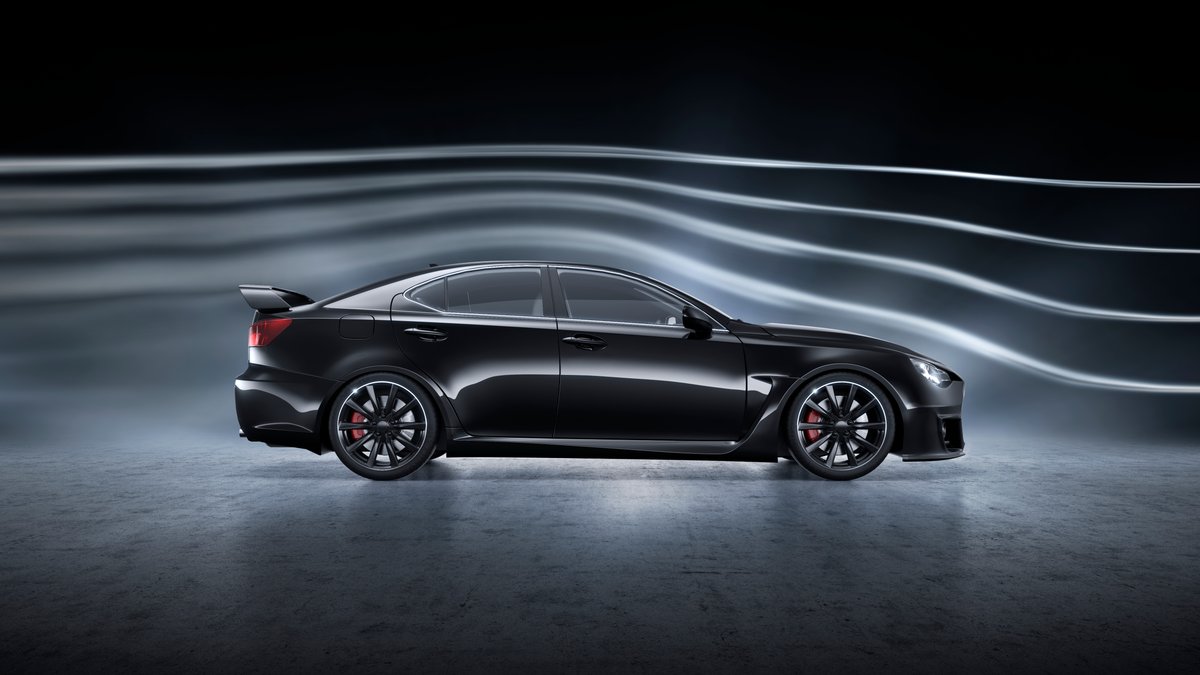
The Navier‑Stokes equations describe how fluids move. They are used to predict weather, design aircraft, and model blood flow. The existence and smoothness problem asks whether solutions to these equations always behave nicely or can develop singularities. The question has stumped mathematicians for decades and is worth a $1 million prize. Using an AI system to tackle it is unusual; the model was trained on a huge corpus of math literature and can generate symbolic reasoning. The proof was not written by a human in a traditional sense, but the AI’s output was checked by OpenAI staff before it was released.
Mathematicians have greeted the claim with caution. Peer review is the gold standard for validating proofs, and no external experts have yet verified the work. Some reviewers point out gaps in the argument or suspect that the AI may have overlooked subtle errors. Even if the proof holds up, its practical impact will be indirect. A rigorous solution to Navier‑Stokes could improve turbulence models, but translating that into new technology will take years. The immediate benefit is mainly conceptual: it could reshape how we approach complex problems and inspire new AI tools for research.
OpenAI will make the full proof available for scrutiny by the mathematical community. If independent experts confirm its correctness, it would be a landmark achievement in both mathematics and artificial intelligence. If not, the episode will still highlight the potential and limits of AI in creative problem solving. In either case, the story will fuel debate about the role of machine learning in fundamental science and set the stage for future collaborations between humans and algorithms.
Read Full Story at Scientific American →