These small changes can improve your home surround sound in a big way
Angle the speakers, move the couch a bit, lay down a rug. If your home surround system isn't exactly performing the way you expected, then the problem probably isn't your equipment. There's a massiv…
If your home surround system isn't exactly performing the way you expected, then the problem probably isn't your equipment. There's a massive chance that the big issue is that you set your system up years ago, plugged it in and haven't touched it since. All the while, the room itself and the way the speakers are aimed have changed completely.
The good news is that, more often than not, you don't have to spend more money to improve your home theater experience. Before you go throwing money around, you should try out a series of small but targeted adjustments to what you already own. Adding a rug, repositioning your couch, angling your speakers, placing the subwoofer right and running the built-in calibration tool most speaker systems come with can make a world of difference.
You could, of course, use acoustic foam, call up professionals to set things up for you and buy new hardware. But why spend a ton of money when you could just try a few simple fixes that work with a basic 5.1 system or something more elaborate. Check out the whole guide to see whether there's any advice you want to give a try.
Room acoustics are the easiest thing you can fix and often the one thing everyone overlooks. Hard surfaces like bare walls, tile floors and large windows reflect sound waves, creating muddied sound and echo that affect dialogue and sound effects. Anthony Grimani, President of Performance Media Industries and several other audio engineering firms, as well as a former sound engineer with Dolby Laboratories and Lucasfilm THX, states that more than half of what you hear in a regular room is sound bouncing off hard surfaces like ceilings, walls and hard flooring.
The fix to this problem isn't buying foam panels that would require a whole overhaul of your living room. Instead, you can improve this with rugs, curtains, artworks and framed photos. So, start decorating!
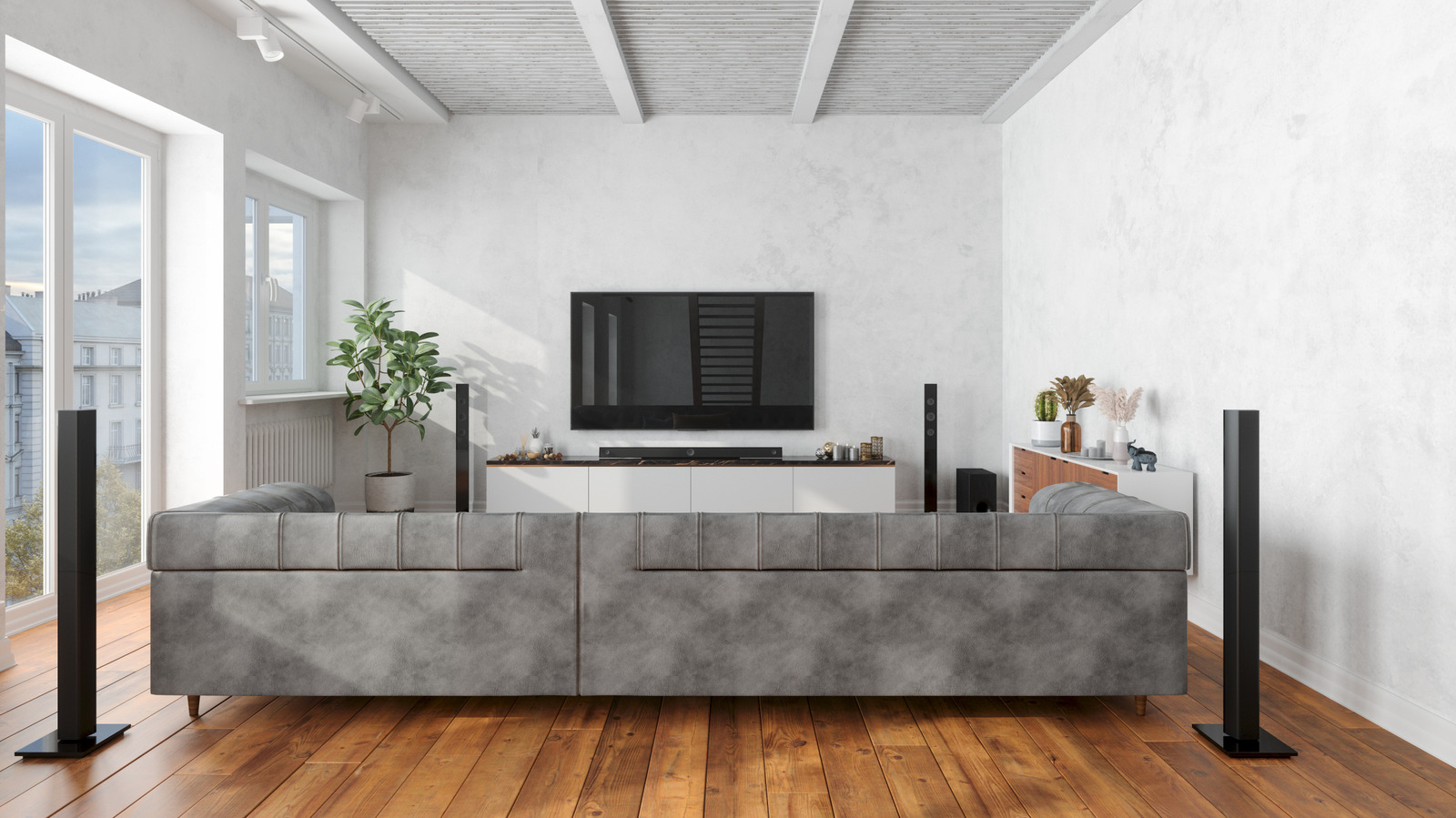
Where you place your speakers is half of this equation, while the other half is how you point your speakers. The front left and right speakers need to be about a foot away from side and back walls. They also need to have about the same space between them as there is between the speakers and your seating position. The speakers should also be angled toward your main seat, so start poking at them until they're positioned just right.
The center channel should be placed directly above or below your TV, aligned with the screen's midpoint. Since this speaker carries most of your movie dialogue, keeping it aimed at ear level matters.
For 5.1 surround systems, you have to position the speakers to the sides of your seating area, always aiming towards your main seat, ideally at or slightly above ear level. For 7.1 surround systems, the back speakers should be placed behind your seating position. Randomly placing your speakers wherever they fit in the room will undermine every effort you make to improve sound quality.
Read Full Story at Engadget →