Geopolitics and grain don't mix, say these Montana farmers
A field of hay bales frame an old western wooden barn with the dramatic Mission Mountain Range in the background near Pablo, Montana. Chuck Haney/Design Pics Editorial/Universal Images Group via Gett…
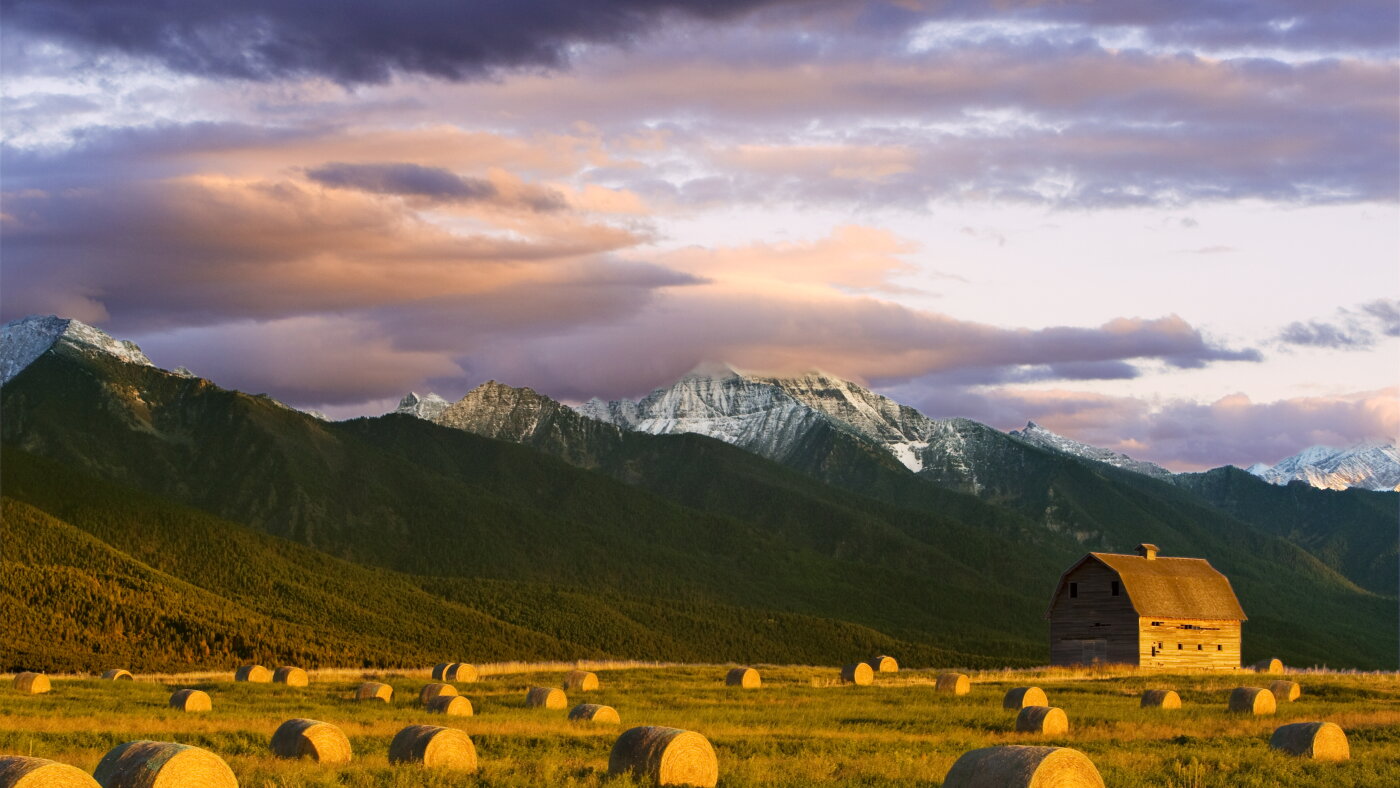
A field of hay bales frame an old western wooden barn with the dramatic Mission Mountain Range in the background near Pablo, Montana. Chuck Haney/Design Pics Editorial/Universal Images Group via Getty Images hide caption
GREAT FALLS, Mont. - The escalating trade fight between the Trump administration and Canada is just the latest headwind facing American farmers who were already dealing with soaring fuel and fertilizer prices.
After President Trump imposed tariffs on Canadian products, earlier this month Ottawa imposed retaliatory tariffs on $20 billion worth of U.S. goods, including farm equipment.
"I'd like to consider buying a new drill and I'm also looking at grain bins that come out of Canada and I'm afraid I won't be able to afford them," says Steve Sheffels, a local wheat farmer.
He farms in what's known as the Golden Triangle, an area in north-central Montana that's one of the most productive wheat and barley growing regions in the U.S.
Touching three Canadian provinces, the economies and cultures of Montana and Canada are largely intertwined. Canada is hands down the state's biggest trading partner, accounting for $1 billion in cross-border sales, according to the Montana World Trade Center at the University of Montana.
"Canadian companies also purchase Montana cattle and they send them up to Canada where they're fed out, and when they're up there a lot of times they're eating Montana barley," says Brigitta Miranda-Freer, the center's executive director.
Montana farmers had turned to Canada for select equipment and supplies due to the favorable exchange rates. But now most farm equipment is subject to a 15% or higher retaliatory tariff.
Read Full Story at NPR News →