Young octopuses slap fish to defend territory, study finds
Young wild octopuses have been observed engaging in aggressive behaviors toward territorial fish, including unique body patterns and slapping motions, suggesting they defend their territory. This res…
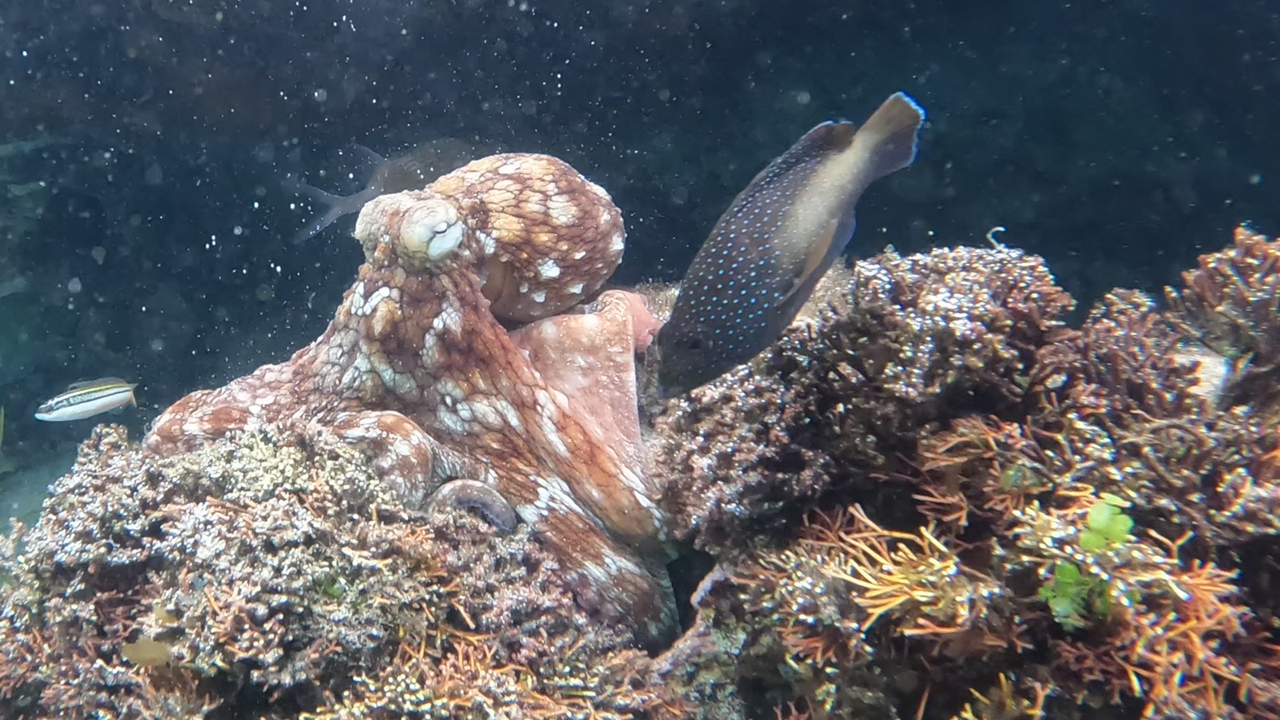
Young wild octopuses have been observed displaying unusual behavior around territorial fish species, engaging in what researchers describe as a form of "fight club." This behavior includes a unique body pattern and aggressive movements, particularly when the fish venture too close to their territory. The study, published in a marine biology journal, highlights interactions that suggest octopuses are not only aware of their surroundings but also willing to defend their space.
This behavior is significant because it sheds light on the social dynamics of octopuses, a species often considered solitary. The research was conducted in the waters off the coast of Australia, where researchers observed juvenile octopuses interacting with various fish species. Understanding these interactions is crucial as it may provide insights into the adaptability and intelligence of octopuses, which are known for their problem-solving abilities and complex behaviors. The timing of this study coincides with growing interest in marine ecosystems and how creatures like octopuses respond to environmental pressures.
The study reveals that when faced with the presence of certain fish, octopuses display a distinctive color pattern known as "disruptive coloration," which can be interpreted as both a warning and a means of camouflage. In some instances, they even extend their arms to slap the fish, a behavior suggesting both a defense mechanism and a playful challenge. Researchers recorded these interactions, noting that the octopuses would sometimes engage in these confrontations repeatedly, indicating a level of persistence not typically associated with their kind.
Looking ahead, this research could lead to further studies on the social behaviors of octopuses and their interactions with other marine life. Understanding these dynamics is essential for conservation efforts, especially as marine habitats face threats from climate change and overfishing. The findings may also encourage deeper investigations into the cognitive abilities of cephalopods, providing new perspectives on their role in the ecosystem.
Read Full Story at Live Science →