World's oldest evidence of habitual drug use traced back 25,000 years to Indonesia
The world's oldest known habitual drug use can be traced to an island in Indonesia, where ice age hunter-gatherers sucked on betel nuts — palm seeds that contain a neuroactive substance, a new study …
The world's oldest known habitual drug use can be traced to an island in Indonesia, where ice age hunter-gatherers sucked on betel nuts — palm seeds that contain a neuroactive substance, a new study finds.
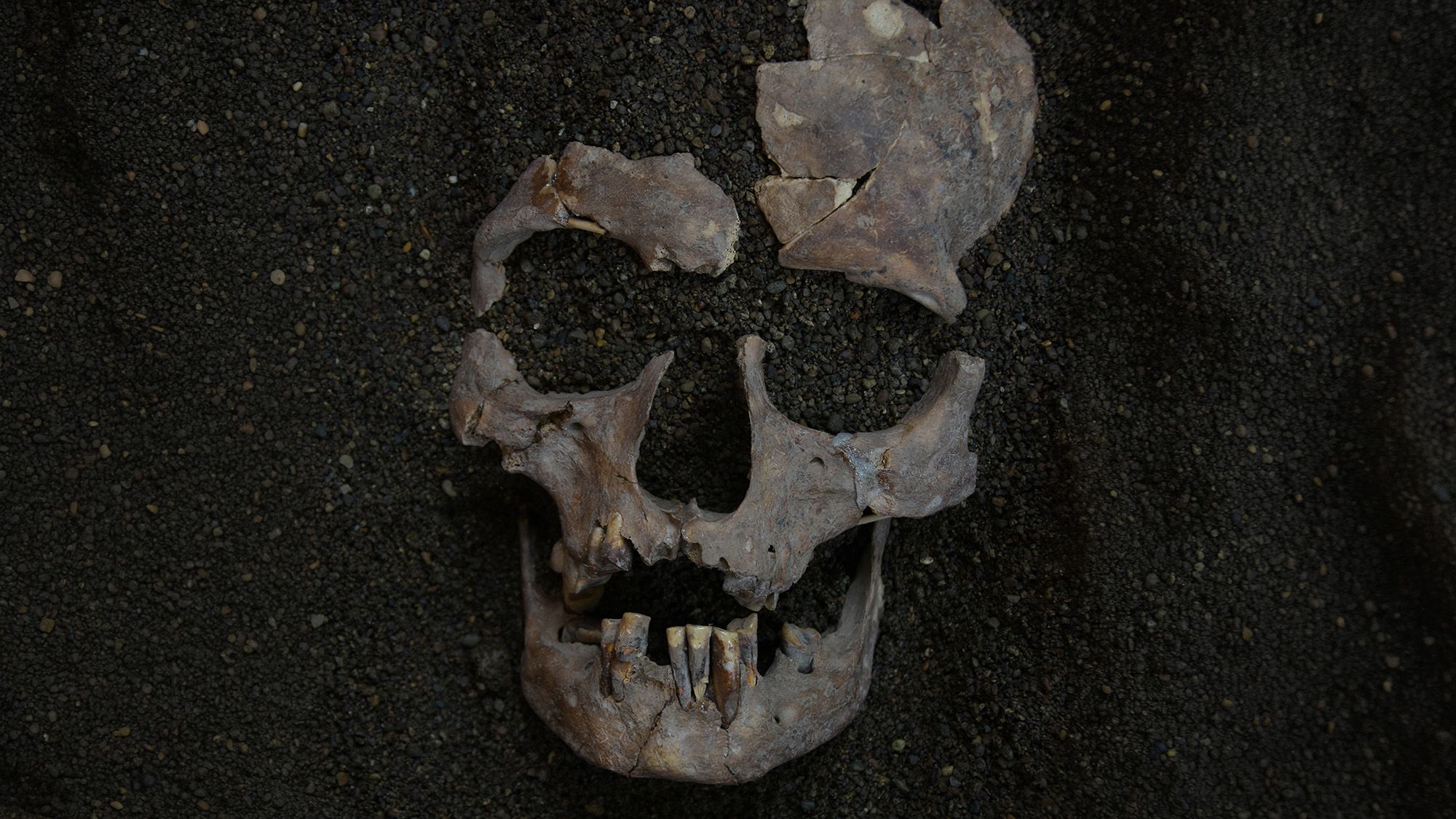
Scientists made the discovery after studying strange grooves in the teeth of two prehistoric hunter-gatherers. The deep grooves were caused by regularly sucking on betel nuts ( Areca catechu ), likely for relief from the pain of toothache, according to the study, which was published Wednesday (Sept. 9) in the journal Science Advances .
The partial skeletons of the two people were found on the island of Sulawesi, but their lives were separated in time by thousands of years. One of them, a man who died between about the ages of 40 and 50, lived between 25,000 and 16,000 years ago. This period roughly corresponds to the Last Glacial Maximum, the coldest part of the last ice age — although Sulawesi was not covered with ice at that time. The second person, who was around the same age when they died, lived on Sulawesi between 7,600 and 6,300 years ago, according to the study. The sex of this individual could not be determined.
Betel nuts contain a neuroactive compound called arecoline, which has a powerful stimulant effect when chewed with slaked lime, or calcium hydroxide. This early method of directly sucking betel nuts, however, would have only made the mouth numb.
These hunter-gatherers had so much dental damage, the new analysis found that they must have sucked on betel nuts almost continuously throughout their lives. But it seems these numbing nuts didn't have the desired effect in the long run. Instead, it may have made their dental conditions worse by eventually exacerbating any painful holes in their teeth.
"The more they sucked on the nut to relieve toothache , the worse that the damage to their teeth became," study first author Adam Brumm , an archaeologist at Griffith University in Australia, told Live Science. The grooves progressively became deeper, and in one individual they exposed the tooth's inner pulp cavity. "It would have been excruciatingly painful," Brumm said.
Although a 2017 study showed that Neanderthals used the bark of plants like poplar (genus Populus ) for its pain-killing properties (poplars contain salicylic acid, a form of the active ingredient in aspirin), this is the earliest evidence of a drug from plants being used habitually, Brumm said.
Get the world’s most fascinating discoveries delivered straight to your inbox.
Read Full Story at Live Science →