NASA's Roman Telescope reaches Sun-Earth L2 point
NASA’s Roman Space Telescope launched October 7, 2024, and is traveling to the Sun-Earth L2 point, 1.5 million km away, to conduct infrared surveys with minimal interference. Its mission, starting mi…
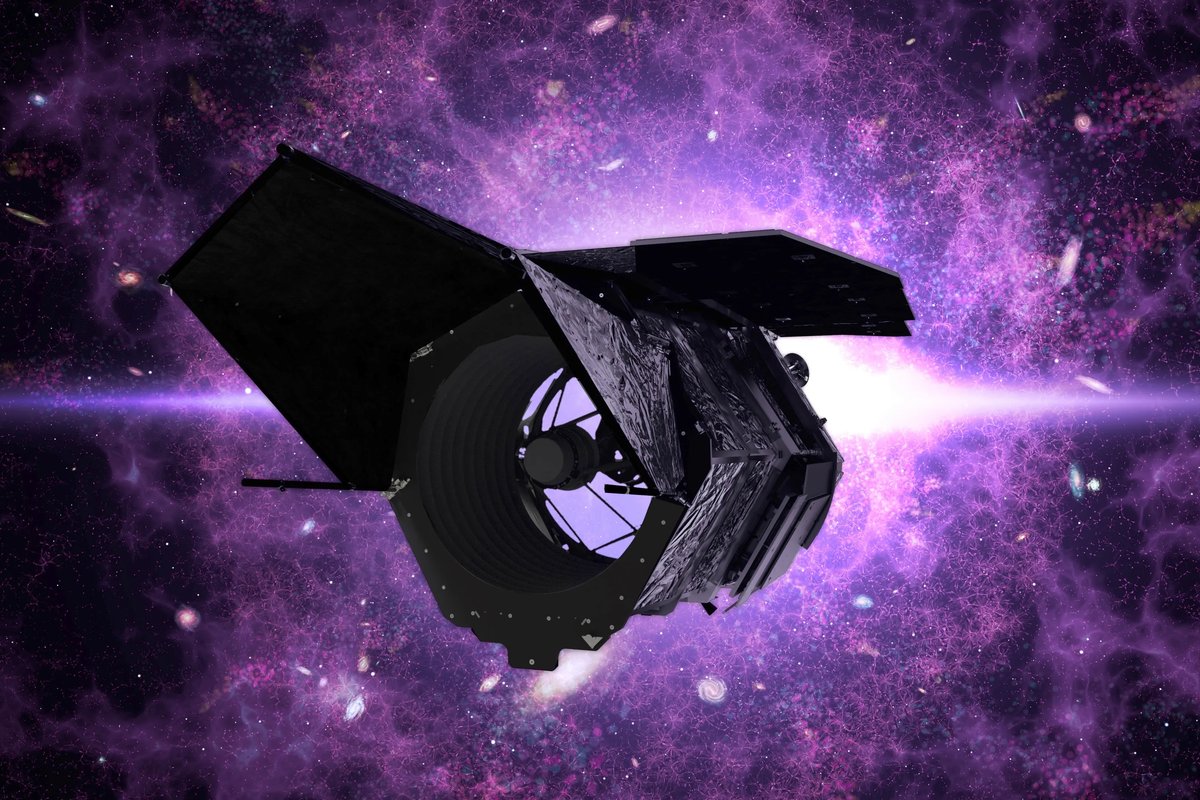
NASA’s Nancy Grace Roman Space Telescope is now on its way to the Sun-Earth L2 Lagrange point, a gravity-balanced parking spot 1.5 million kilometers from Earth. The spacecraft launched atop a SpaceX Falcon Heavy rocket from Kennedy Space Center on October 7, 2024, at 10:16 p.m. EDT. This location keeps the telescope stable while keeping Earth and the Sun behind it, minimizing interference for its wide-field infrared surveys.
Lagrange points are spots where the gravitational pull of two large bodies, in this case Earth and the Sun, cancels out. L2 is ideal for infrared telescopes like Roman because it stays cool and avoids heat from Earth or the Moon. This matters because Roman’s mission—mapping billions of galaxies and searching for dark energy—requires extreme temperature control and long, uninterrupted views of the sky. Previous infrared missions, like Planck and JWST, also chose L2 for the same reason.
Engineers are guiding Roman through a series of engine burns to reach L2 over the next three months. Once there, it will unfurl its 2.4-meter primary mirror and deploy a giant sunshield the size of a tennis court. After six months of commissioning, science operations begin in mid-2025. The telescope will scan the cosmos in infrared, hunting for rogue planets, distant supernovae, and clues about why the universe’s expansion is speeding up.
This mission could reshape our understanding of dark energy and exoplanets. Roman’s wide field of view—100 times larger than Hubble’s—lets it capture vast cosmic landscapes in a single shot. By mapping hundreds of millions of galaxies and measuring their light over time, scientists hope to determine whether dark energy’s strength has changed since the early universe. If it has, the implications for physics—and our place in the cosmos—would be profound.
Read Full Story at Scientific American →