Whatever happened to the floating schools of Bangladesh?
Hosne Ara teaches a group of fourth graders, seated on benches inside the floating school's classroom. Ali Asif Shawon for NPR hide caption In September 2018, we posted a story from flood-prone Bang…
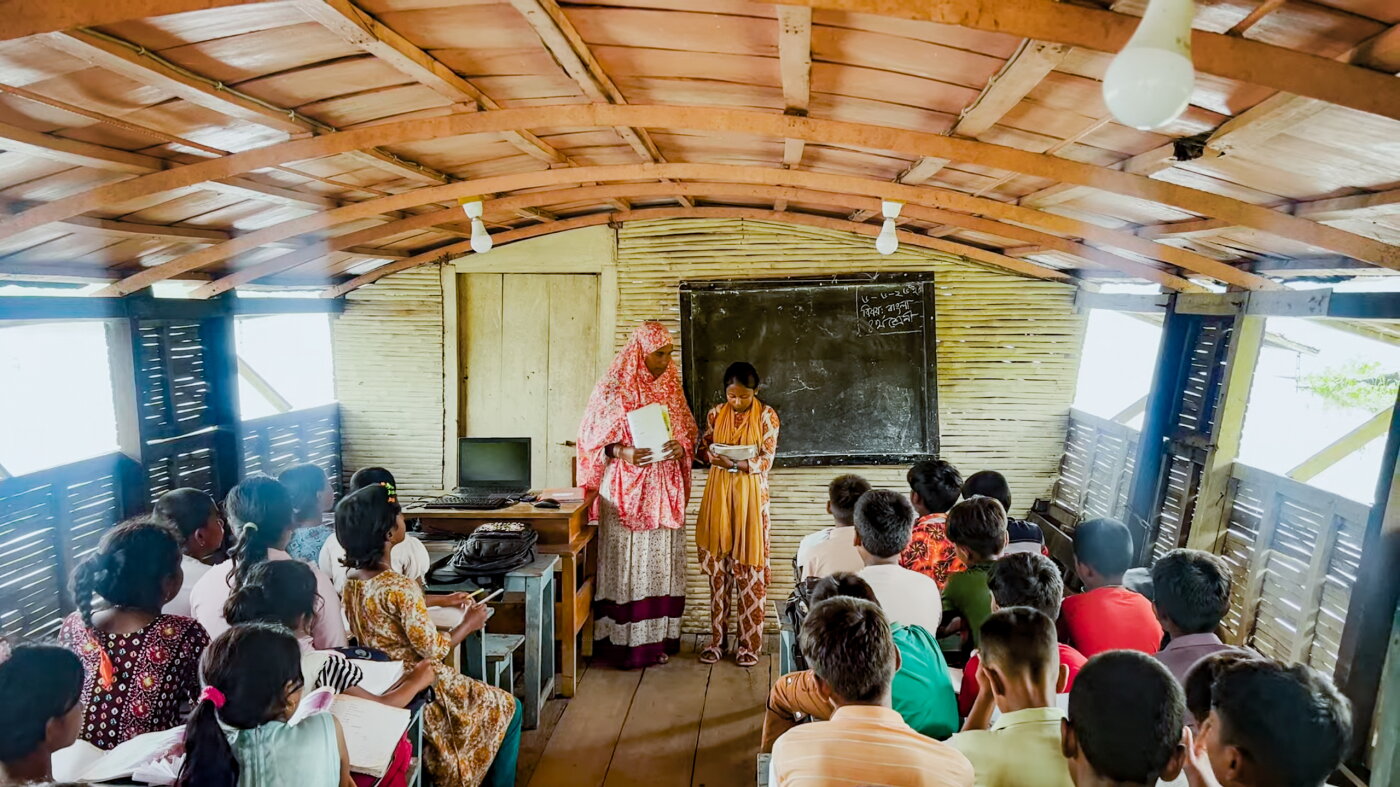
Hosne Ara teaches a group of fourth graders, seated on benches inside the floating school's classroom. Ali Asif Shawon for NPR hide caption
In September 2018, we posted a story from flood-prone Bangladesh, 'Floating Schools' Make Sure Kids Get To Class When The Water Rises . Did the floating schools actually work, and what happened to the children who attended them? This story is part of our annual series, Whatever happened to …
We're revisiting some of our past global health and development stories to see "Whatever happened to ..."
Eight years ago, NPR correspondent Jason Beaubien visited a riverside village in the northwest of Bangladesh and found a small beige boat tied up in tall grass beside the Atrai River.
The boat was packed with narrow benches, which in turn were jammed with children. About 29 third-grade students sat shoulder to shoulder in front of a blackboard on this very first floating school of Bangladesh, which started its journey 24 years ago.
The floating schools were a response to a longstanding local problem of seasonal floods and impassable, muddy roads that kept children from reaching conventional schools. Now, as we come back in 2026, climate-related disruptions are affecting schooling on a much larger scale, and that practical local solution has become more necessary and more relevant beyond Bangladesh.
Students head home after class ends at the floating school. Ali Asif Shawon for NPR hide caption
The schools were designed for one flood-prone region, but they now offer a model for how communities can preserve essential services as the environment changes. International recognition highlights the project's growing relevance.
Read Full Story at NPR News →