SpaceX Falcon 9 rocket to collide with Moon on August 5, 2025.
A SpaceX Falcon 9 rocket's upper stage will collide with the Moon on August 5, 2025, creating a crater over 17 meters wide and sending debris plumes into the lunar atmosphere. This event will provide…
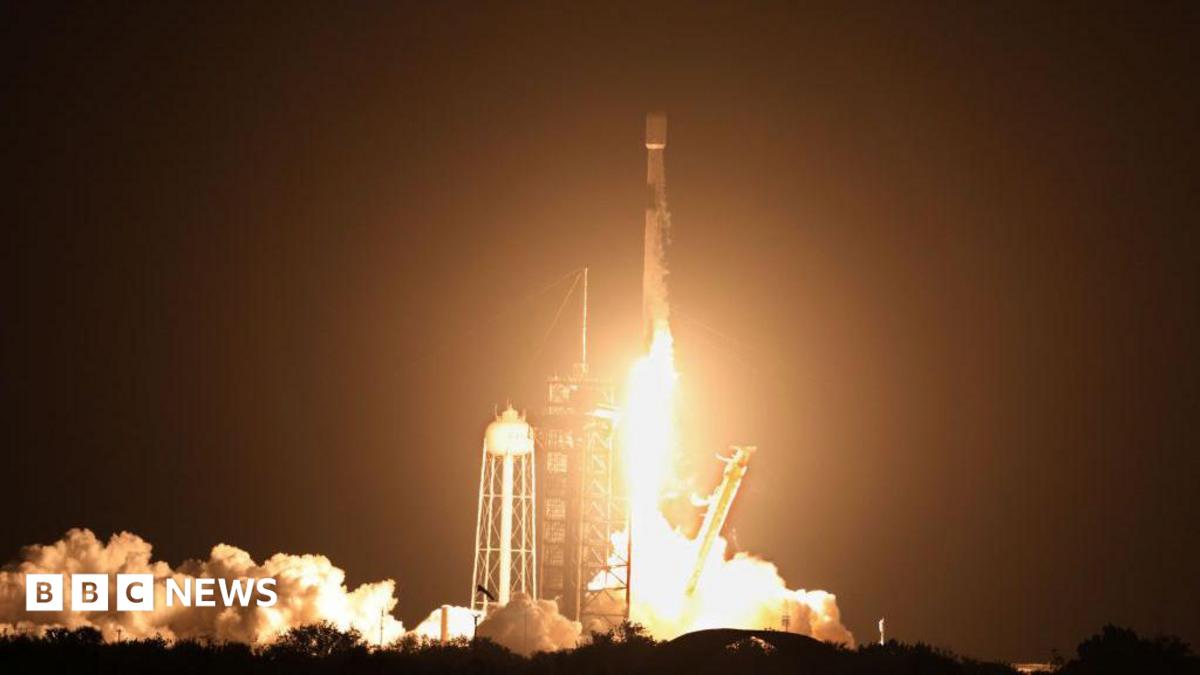
A SpaceX rocket is set to collide with the Moon on August 5, 2025. The upper stage of a Falcon 9 rocket, which has been drifting through space, will impact the lunar surface at approximately 2.43 kilometers per second, or about 5,400 miles per hour. NASA's Centre for Near-Earth Object Studies confirmed the trajectory after independent astronomers identified the rocket's unintended course.
The collision is notable because it highlights the increasing number of human-made objects in space and their potential interactions with celestial bodies. The Falcon 9 rocket was originally launched in January 2025 on a mission to deliver lunar landers and scientific equipment for the United States and Japan. While parts of the rocket are designed to be reusable, others, such as the upper stage now on a collision course, remain in orbit until they collide with another body or re-enter Earth’s atmosphere.
Astronomer Bill Gray, who tracked the rocket’s trajectory, predicts the impact will occur near the Einstein Crater, which is illuminated by sunlight and visible from Earth. The impact is expected to create a crater over 17 meters (56 feet) in diameter and send debris plumes up to 50 kilometers into the lunar atmosphere. Dr. Matt Bothwell, a public astronomer at the University of Cambridge, noted that the event will not pose any danger to Earth and will instead provide a unique spectacle for amateur and professional astronomers alike.
While the impact will not be visible to the naked eye from Earth, those equipped with telescopes may witness a flash as the rocket strikes the Moon's surface. This event is significant not just for its immediate spectacle but also for the scientific observations it will enable. NASA plans to study the impact site to gather data, furthering our understanding of both lunar geology and the effects of human activities in space.
Read Full Story at BBC World News →