What Argentina gets right about youth soccer — and what the U.S. gets wrong
Children wait to play football in the minor leagues of Newell's Old Boys, where Argentine football star Lionel Messi used to play in Rosario, Argentina, 2018. Eitan Abramovich/AFP via Getty Images hi…
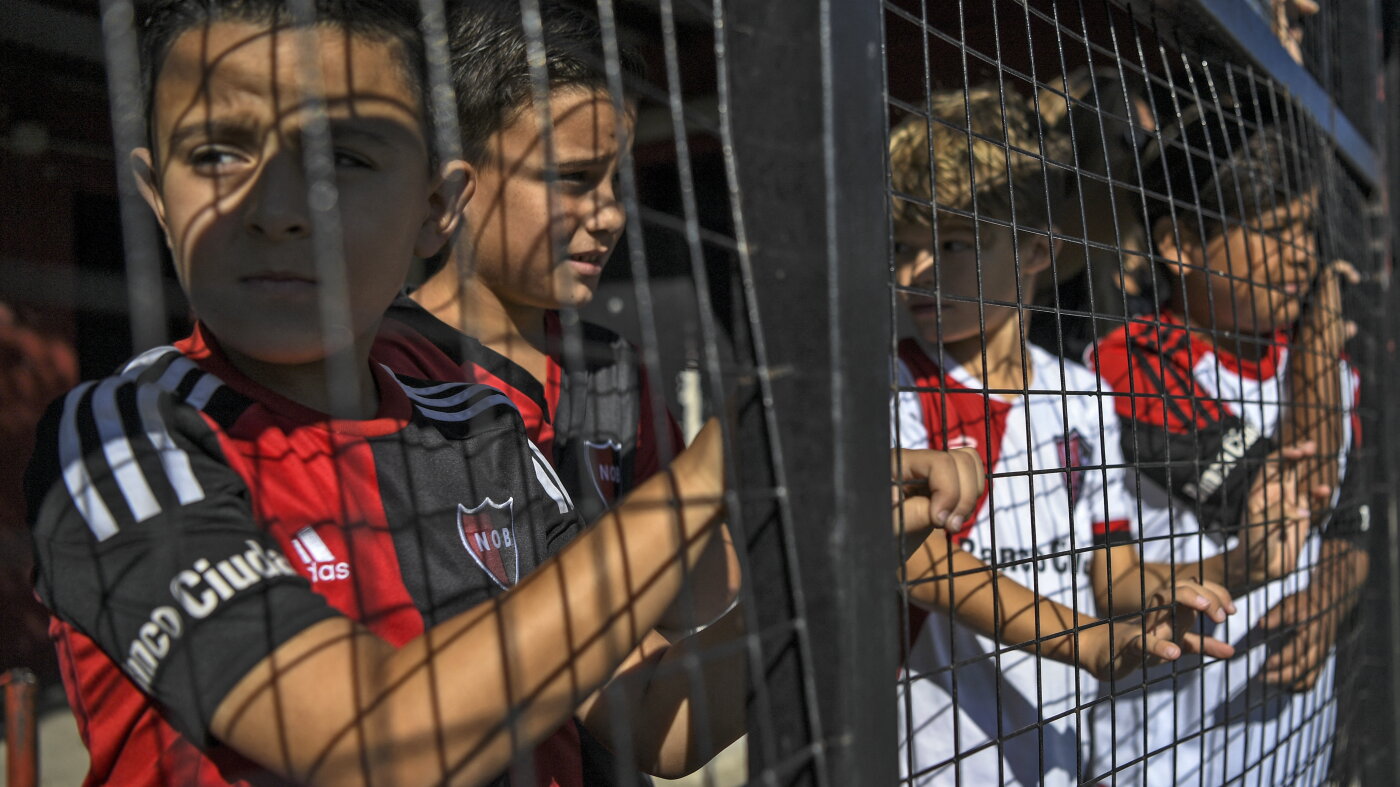
Children wait to play football in the minor leagues of Newell's Old Boys, where Argentine football star Lionel Messi used to play in Rosario, Argentina, 2018. Eitan Abramovich/AFP via Getty Images hide caption
ROSARIO — Newell's Old Boys is one of the most popular soccer clubs in Rosario — Argentina's third-largest city. It also runs one of the country's most successful youth academies.
Every week, around 700 kids ages 4 to 12 train at its facilities in the center of the city, where black and red murals depict famous alumni such as Argentine soccer superstar Lionel Messi.
The most promising young players at Newell's "baby football" academy receive scholarships to train for free. The rest pay around $25 a month to train twice a week with coaches who are mostly former professionals. On weekends competitive matches are held against other squads from around the city.
"Here you get good coaching," says Carlos Gil a fencing contractor, who takes his eight year-old son to practice at Newell's every week.
"You have the chance that your child can develop his skills," Gil says. He shakes his head and chuckles after learning that in the United States, parents pay between $1,000 and $3,000 a year for the kind of instruction his son gets at Newell's.
"If you did that here, almost nobody could play," he said of the fees at U.S. youth soccer clubs. He also says that if Argentine clubs charged their young players thousands of dollars each year, the country's status as a global soccer powerhouse might be at risk.
"Our best players tend to come from low income backgrounds," Gil said. "Where would they train?"
Read Full Story at NPR News →