They live by a shrine to a saint. Why are their homes being demolished?
Saida Tanvir stands inside her partially damaged home near Bari Imam on August 20 in Islamabad, Pakistan. Her son, Azeem Ahmed, 16, died while trying to block a bulldozer from crushing their roadside…
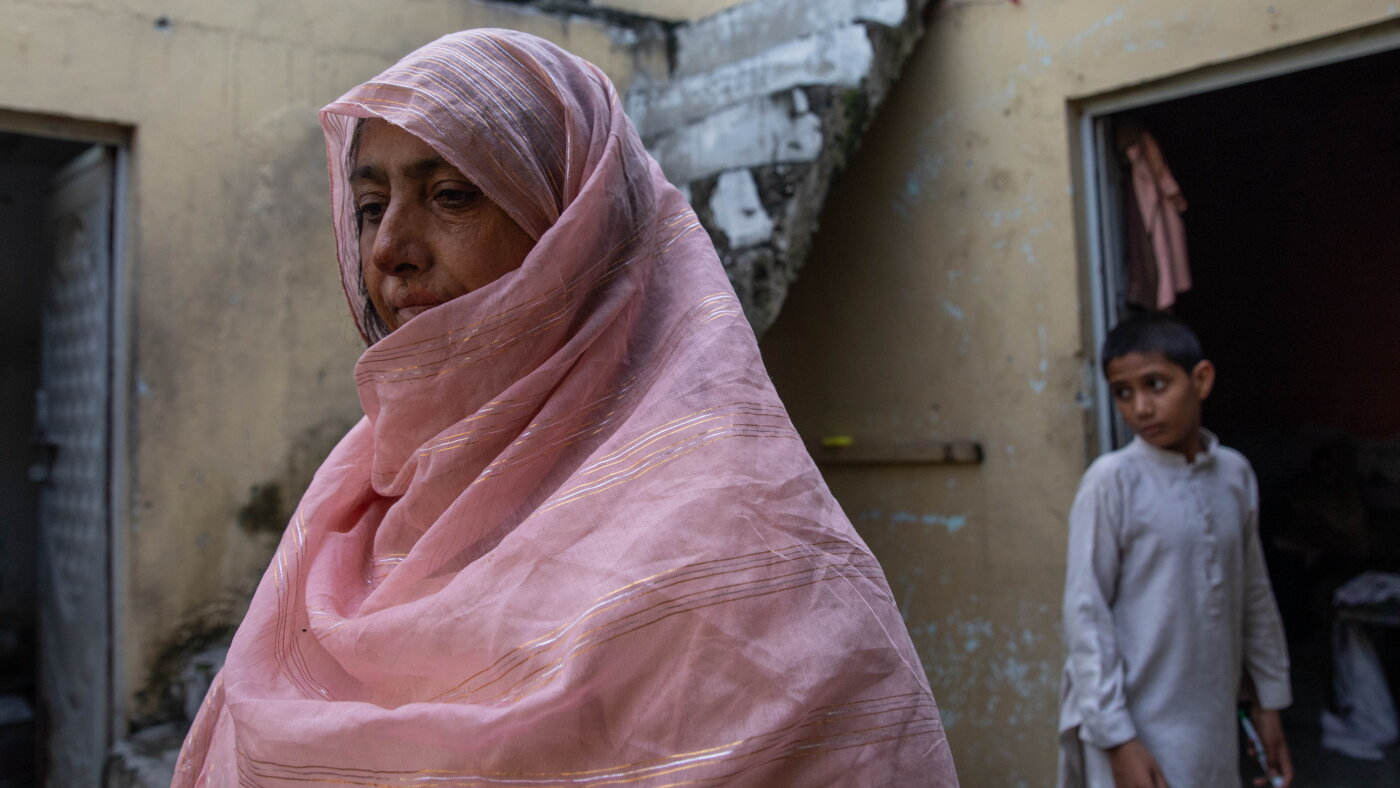
Saida Tanvir stands inside her partially damaged home near Bari Imam on August 20 in Islamabad, Pakistan. Her son, Azeem Ahmed, 16, died while trying to block a bulldozer from crushing their roadside grocery store over the winter. Betsy Joles for NPR hide caption
ISLAMABAD, Pakistan –- For more than 300 years , people have settled around the soaring marble shrine of the Sufi saint known as Bari Imam, nestled at the foothills of the Himalayas. Some served the hundreds of pilgrims who visit each day, others to seek the saint's blessings. They include the ancestors of 30-year-old Wirasat Aly, who for generations lit evening lamps to honor the saint whose shrine now abuts upscale areas of Islamabad, the capital of Pakistan.
But on a recent day, Aly was salvaging bricks from his razed home, tossing the good ones in a pile to sell to construction companies. A truckful is worth the equivalent of $5.40, and it's how he's scraping together $70 monthly rent to shelter his family, including 8 children in his care.
"We have to do something for the children," he says. "I'm going crazy. "Our stomachs are empty." Aly says he had to pull the children out of school because he couldn't afford the monthly bus fees, lunch money or books.
Clothing dries inside a demolished building in the neighborhood near the Bari Imam shrine. Betsy Joles for NPR hide caption
In a roughly one-mile radius around Aly, there's rubble where there were once tightly-packed homes, as well as roadside stalls offering trinkets like meditation beads and prayer carpets. There were also tiny tent-like kitchens manned by cooks who, for a price, would prepare cauldrons of rice to serve at the free cafeteria adjacent to the Bari Imam shrine: a hall crowded with pilgrims and families of the working poor. Worshippers pay for those cauldrons as a way to seek the saint's blessings.
But between December 2025 and April, local authorities razed much of the neighborhood, including hundreds of homes and shops.
A man walks in front of demolished buildings. Betsy Joles for NPR hide caption
Read Full Story at NPR News →