The U.S. has more thalidomide survivors than the government admits
Dr. Frances Oldham Kelsey, then-pharmacologist at the Food and Drug Administration, holds three packages of Contergan, the German brand name for thalidomide, on Oct. 15, 1962. Kelsey prevented the FD…
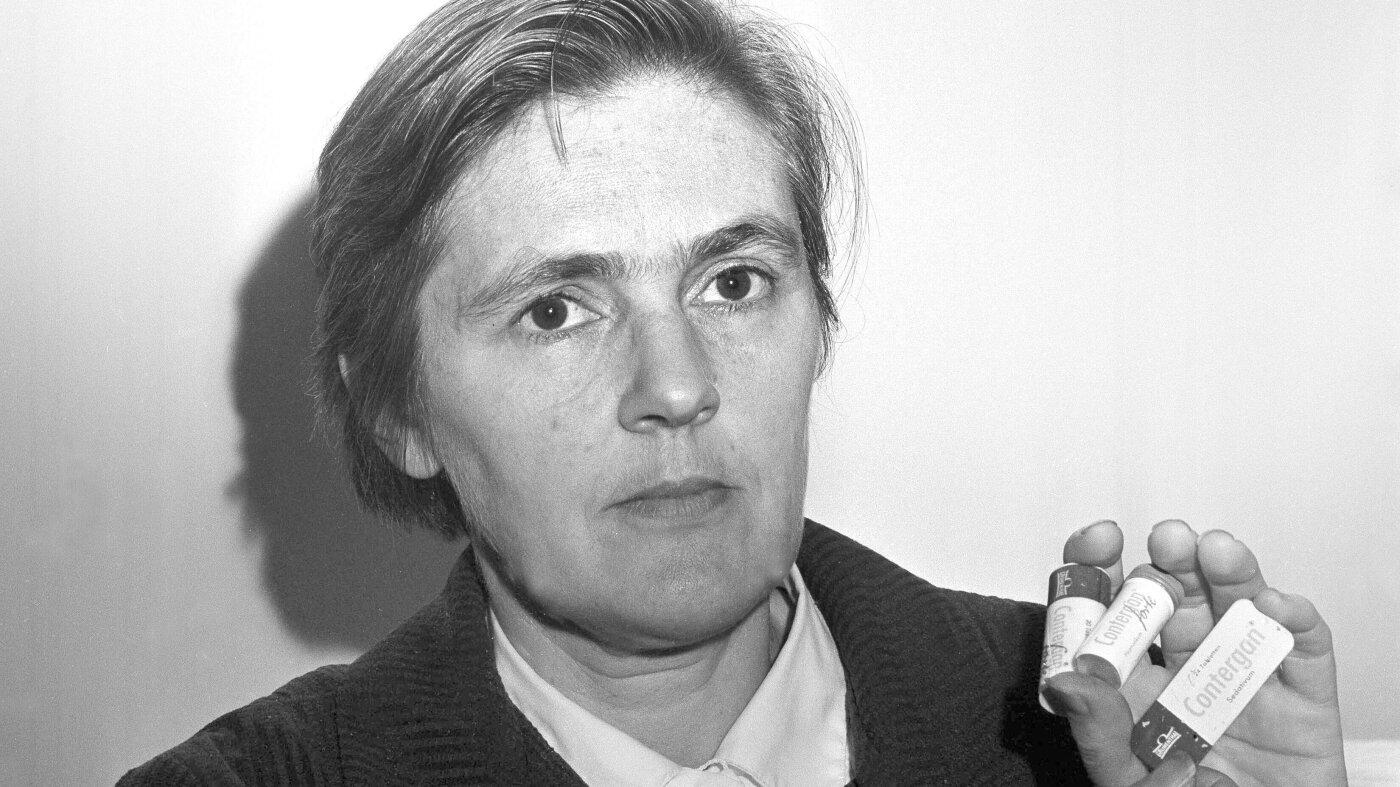
Dr. Frances Oldham Kelsey, then-pharmacologist at the Food and Drug Administration, holds three packages of Contergan, the German brand name for thalidomide, on Oct. 15, 1962. Kelsey prevented the FDA from approving the drug for general use in the United States. William J. Smith/AP hide caption
When Cincinnati-based pharmaceutical company William S. Merrell applied for Food and Drug Administration approval for a German-made sedative in late 1960, it expected the application to sail through the process and be on store shelves in time for Christmas.
The drug, thalidomide, was not approved that year or the next. A persistent medical reviewer at the FDA kept the drug from being approved for general use. Dr. Frances Oldham Kelsey's actions fundamentally changed the agency's testing and approval process, leading to the robust regulations that exist today.
President John F. Kennedy publicly praised Kelsey for sparing "us this terrible human tragedy which has been visited on families in Germany."
Doctors were already giving thalidomide to thousands of U.S. patients , including pregnant women. Some children whose mothers were given the drug during pregnancy were born with severely deformed limbs.
Those children are now adults, and they want the federal government to formally acknowledge their existence.
"We go to doctors today who say it didn't happen here in the United States. Oh yeah, it did," said Gwen Riechmann , who was born with phocomelia, the signature shortened limb deformity caused by thalidomide.
Phocomelia is rare, but slightly more common outside the United States in countries such as Britain and Germany, where thalidomide was more widely sold.
Read Full Story at NPR News →