Dennis Koch analyzes Bitcoin's impact on Europe's financial power dynamics
Dennis Koch's article explores the hidden structures of modern finance and Bitcoin's potential role in shaping Europe's monetary future, highlighting the concentration of power among financial instit…
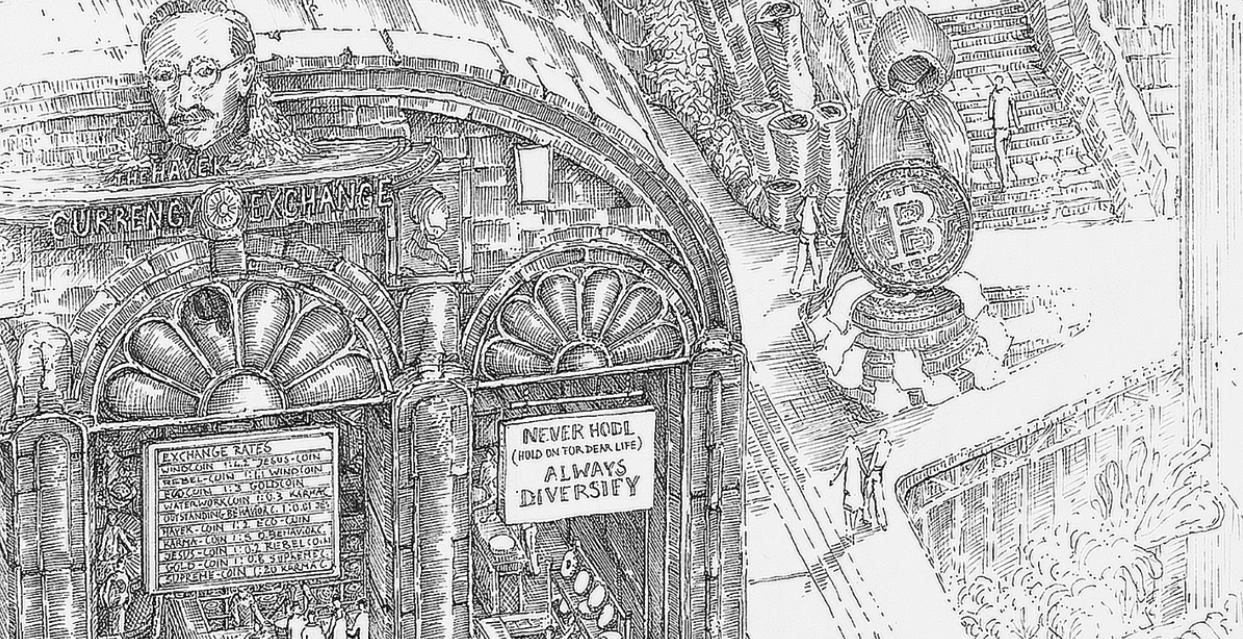
Dennis Koch’s latest Bitcoin Magazine feature maps the hidden structures that underlie modern finance and examines how Bitcoin fits into Europe’s monetary future. The piece, titled “The Architecture of Money: Mapping Financial Power in the Age of Bitcoin,” draws on research by Carlijn Kingma, Thomas Bollen and Martijn Jeroen van der Linden to chart the “waterworks of money” that move behind the scenes of banks, regulators and sovereign lenders. It was published this week and immediately sparked discussion among policymakers and crypto advocates.
The authors argue that today’s financial system resembles an invisible plumbing network, where power concentrates in a handful of institutions that control the flow of capital. They trace the evolution of this architecture from post‑World‑War‑II Bretton Woods arrangements to the rise of central bank digital currencies and the growing influence of fintech firms. Their analysis suggests that Europe is at a crossroads: regulators are drafting new rules for digital assets while the European Central Bank explores its own digital euro. In this climate, Bitcoin is presented not as a rival currency but as a potential benchmark for transparency and decentralisation, offering a way to test the limits of the existing power structure.
Reactions to the article have been swift. European banking executives see the report as a reminder of the need for robust oversight, while crypto‑friendly politicians cite it as evidence that Bitcoin can enhance financial resilience. The researchers provide concrete figures, noting that over 60 percent of European cross‑border payments still rely on legacy correspondent‑bank networks, a system that Bitcoin’s peer‑to‑peer model could bypass. They also highlight that the European Union’s upcoming MiCA regulation could either cement the status quo or open space for digital assets to play a larger role.
What happens next will depend on how quickly regulators move and whether Bitcoin’s volatility can be tamed enough for mainstream use. If European lawmakers adopt a balanced approach, Bitcoin could become a testbed for a more open, auditable financial architecture. If not, the entrenched “waterworks” may simply adapt, incorporating crypto tools without ceding any real power. The debate, sparked by Koch’s article, will likely shape Europe’s monetary policy for years to come.
Read Full Story at Bitcoin Magazine →