NASA captures images of massive superbubble in Large Magellanic Cloud
NASA's Hubble Space Telescope has captured images of a massive 'superbubble' in the N44 nebula of the Large Magellanic Cloud, measuring about 210 by 140 light-years. This discovery is important for u…
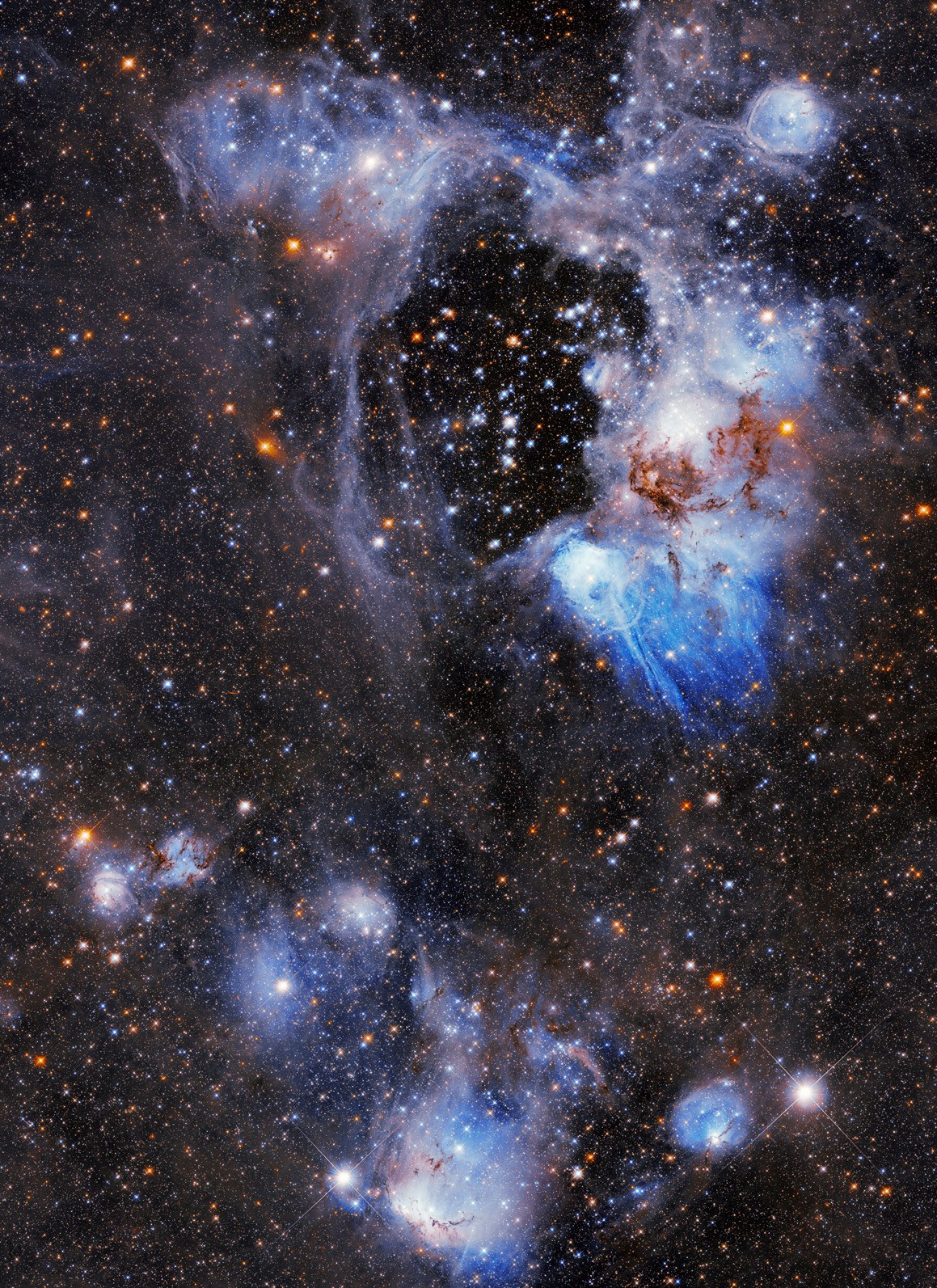
NASA’s Hubble Space Telescope has captured striking images of a nebula, known as N44, located in the Large Magellanic Cloud, a satellite galaxy of the Milky Way. The images, released on September 3, 2026, reveal a massive ‘superbubble’ at the core of N44, which extends approximately 210 by 140 light-years. This central void is surrounded by a dense shell of gas and dust, creating a visually stunning contrast with the glittering stars within the nebula.
This discovery is significant as it sheds light on the processes of star formation and the evolution of galaxies. The Large Magellanic Cloud is a prime location for studying such phenomena due to its proximity to Earth, approximately 163,000 light-years away. The formation of superbubbles like that in N44 is typically driven by the explosive deaths of massive stars, which release energy and materials that can trigger further star formation in surrounding regions. As more stars are born, their stellar winds and supernova events contribute to the nebula's structure.
The N44 nebula is not just a visual spectacle; it is also a laboratory for astronomers. The observations can help scientists understand the lifecycle of stars and the interaction between stellar winds and interstellar gas. The Hubble data reveals a complex interplay of forces, including radiation pressure from hot young stars and the gravitational pull of dense gas pockets. This research can inform models of galactic evolution and the fate of similar nebulae in the universe.
Moving forward, astronomers will continue to study N44 and similar structures to deepen our understanding of star formation. Future observations, including those from the upcoming James Webb Space Telescope, will provide even more detailed insights into the processes at play in these nebulae. Understanding the dynamics within N44 could have broader implications for our knowledge of galaxy formation and the distribution of elements in the cosmos, ultimately influencing how we perceive our place in the universe.
Read Full Story at NASA →