Cologne, Cambridge, Max Planck researchers win 2024 Breakthrough Physics Prize
Researchers from the University of Cologne, University of Cambridge, and Max Planck Institute received the 2024 Breakthrough Physics Prize for discovering altermagnetism, a new form of magnetism that…
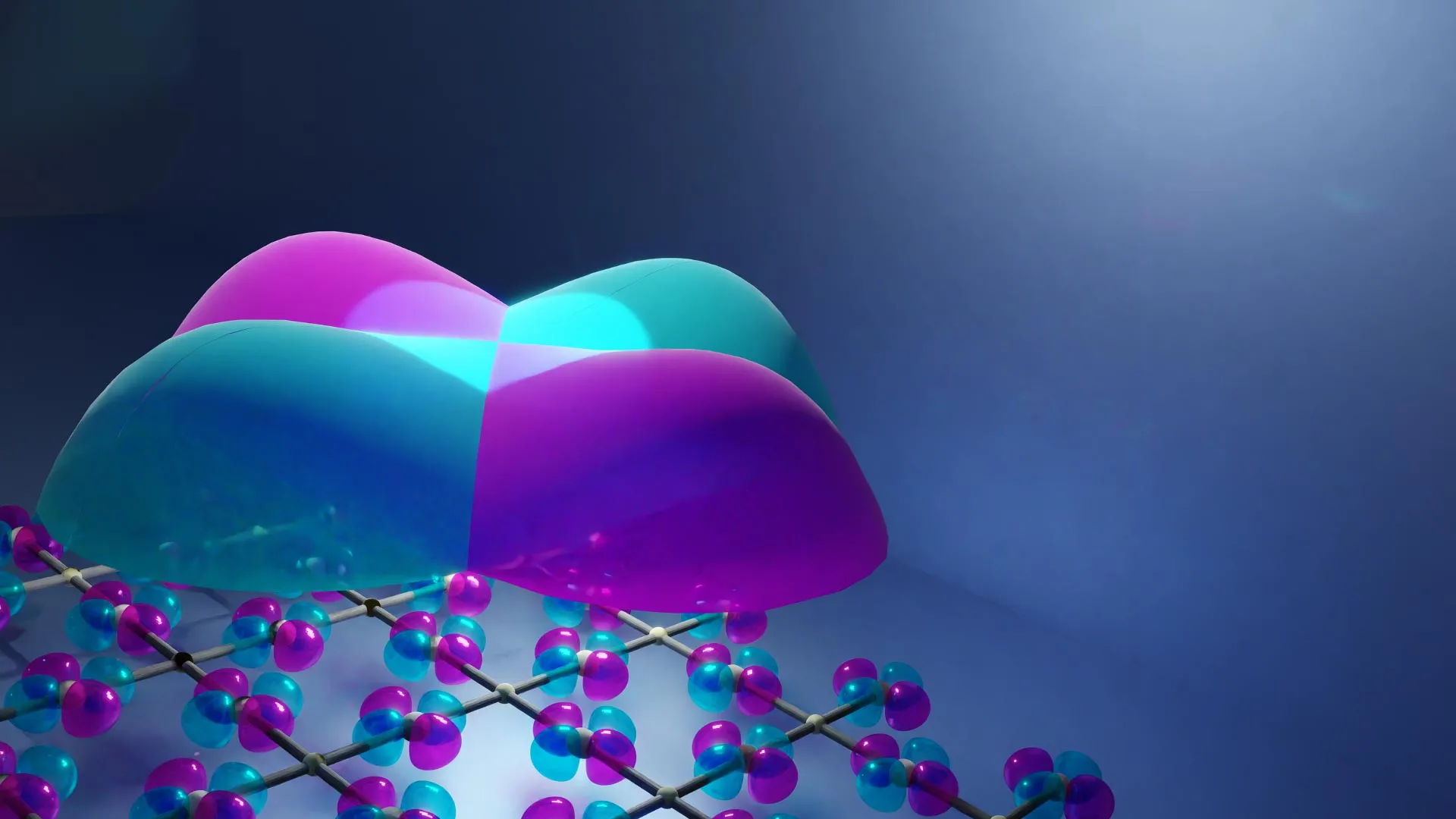
Physicists from the University of Cologne, the University of Cambridge and the Max Planck Institute were awarded the 2024 Breakthrough Physics Prize on Tuesday for uncovering a hidden third form of magnetism, dubbed altermagnetism, a discovery first reported in 2022. The new magnetic phase defies the long‑standing classification of materials as either ferromagnets, which align spins in the same direction, or antiferromagnets, which pair opposite spins. The prize ceremony in San Francisco recognized the team’s experimental and theoretical work that revealed altermagnetism’s distinct symmetry and spin‑polarized electronic structure.
For more than a century, physicists have assumed that only two magnetic orders existed in solid‑state systems. Ferromagnets generate a net magnetic field, while antiferromagnets cancel out any macroscopic field, limiting their use in conventional devices. The discovery of altermagnetism shows that certain crystals can host a staggered spin pattern that nevertheless produces a strong, direction‑dependent spin polarization without a net magnetic field. This breaks the binary view and opens a new class of materials that combine the stability of antiferromagnets with the spin‑selective properties of ferromagnets.
The breakthrough came from a combination of angle‑resolved photoemission spectroscopy and advanced ab‑initio calculations on manganese‑based compounds such as RuO2 and MnTe. Researchers observed a characteristic “alternating” spin texture that could not be explained by existing magnetic models. Subsequent theoretical work identified a crystal‑symmetry condition that protects this spin arrangement, coining the term altermagnetism. The finding immediately sparked interest from the spin‑tronics community because devices built on altermagnetic materials could switch spins at terahertz speeds without generating stray magnetic fields that interfere with neighboring components. Early prototypes suggest potential for ultra‑fast, low‑power memory and logic chips, as well as for quantum information platforms that rely on coherent spin states.
The prize signals a rapid shift toward exploring altermagnetic materials in both fundamental research and commercial development. Funding agencies in Europe and the United States have announced new grants to synthesize and test candidate compounds, while major chip manufacturers are evaluating partnerships to integrate altermagnetism into next‑generation processors. If the early promise holds, the technology could reshape computing architectures, offering faster, more energy‑efficient alternatives to today’s silicon‑based systems. The next few years will determine whether altermagnetism moves from the laboratory to the factory floor, potentially redefining how we store and manipulate information.
Read Full Story at ScienceDaily →