Hubble finds Saturn’s south pole decagon evolves by 2026
Hubble observed Saturn’s south pole decagon wave evolving in 2026, confirming it is dynamic. This matters because tracking its changes helps scientists understand giant planet fluid dynamics and impr…
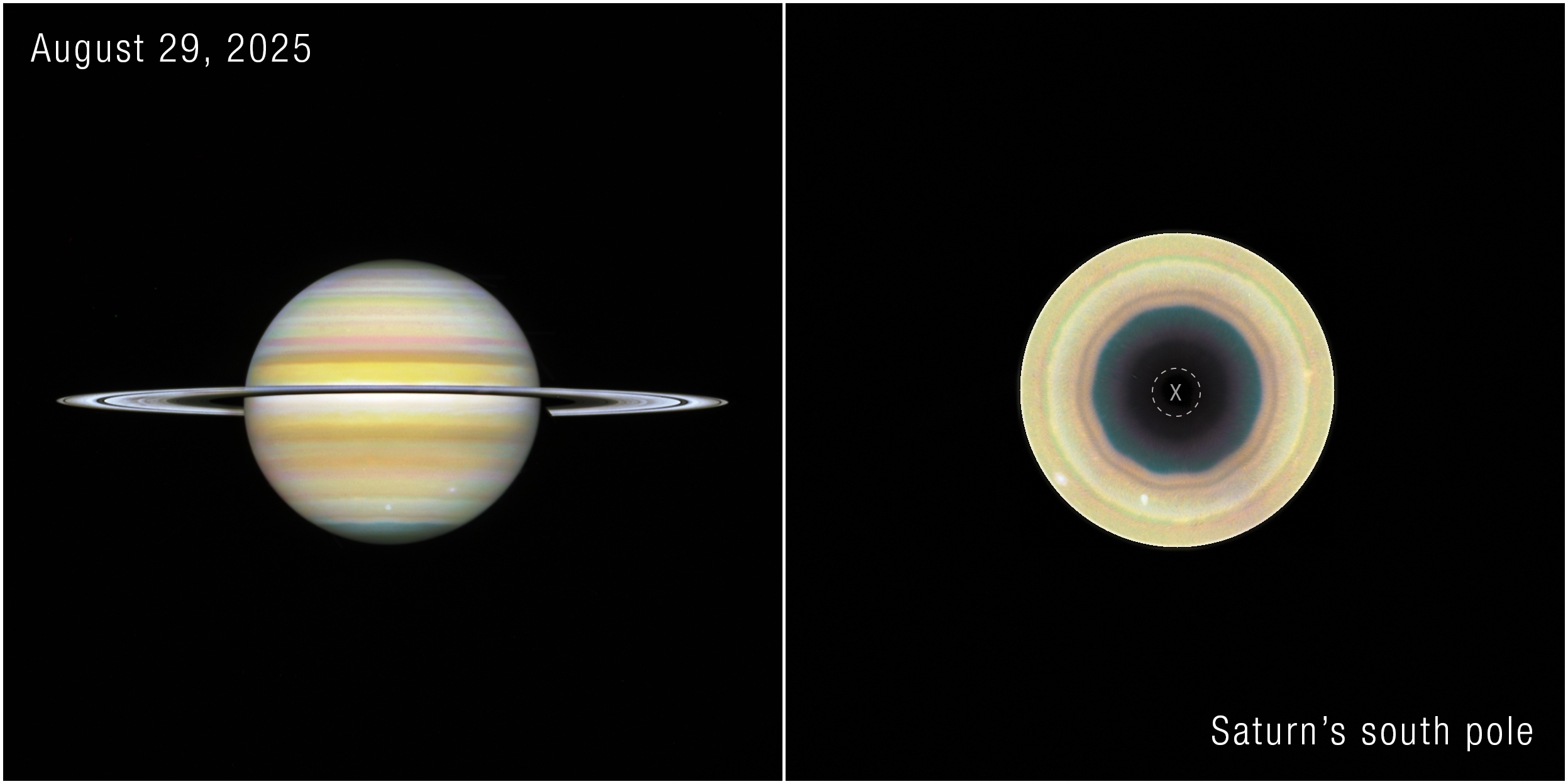
NASA’s Hubble Space Telescope observes a giant, evolving, 10‑sided atmospheric wave encircling Saturn’s south pole. The new images, taken in early 2026, show the wave shifting shape and speed over a few weeks. The feature is the same decagon that appeared in data from the Cassini probe, but Hubble’s sharper view reveals fresh changes in its structure.
Scientists have watched Saturn’s polar storms for decades because they are a window into the planet’s deep atmosphere. The decagon is a standing wave that travels around the pole at about 10 km per hour, a slow but steady pace compared to Earth’s weather. Its appearance and persistence suggest a stable, large‑scale circulation pattern that may be driven by heat from the planet’s interior. The wave’s 10‑sided shape is unusual; on Earth we see hexagonal patterns in Jupiter’s north pole, but a decagon is unique to Saturn. Understanding why this shape forms helps researchers test models of fluid dynamics in giant‑planet atmospheres.
The latest images show the wave’s outer edge brightening, hinting at fresh cloud activity. Hubble’s ultraviolet camera captured the wave’s fine details, revealing a ripple‑like pattern that appears to be growing in amplitude. Dr. Maya Patel, a planetary scientist at the University of Colorado, said the data confirm that the decagon is not static but slowly evolving. “It’s like watching a storm change over time,” she explained. “Every new observation tells us more about the energy that keeps it alive.”
Hubble will continue to monitor the wave over the next year, taking monthly snapshots to track its evolution. The data will be combined with observations from the James Webb Space Telescope, which can peer deeper into Saturn’s atmosphere. Researchers hope to determine whether the decagon will eventually dissipate or transform into a different pattern. The findings could improve climate models for gas giants and offer clues about atmospheric processes on exoplanets with similar conditions.
Read Full Story at NASA →