NASA's Hubble captures stunning image of N44 superbubble in space.
NASA's Hubble Space Telescope has captured an image of N44, a superbubble in the Large Magellanic Cloud, revealing the effects of massive stars' winds and supernovae on star formation and galaxy dyna…
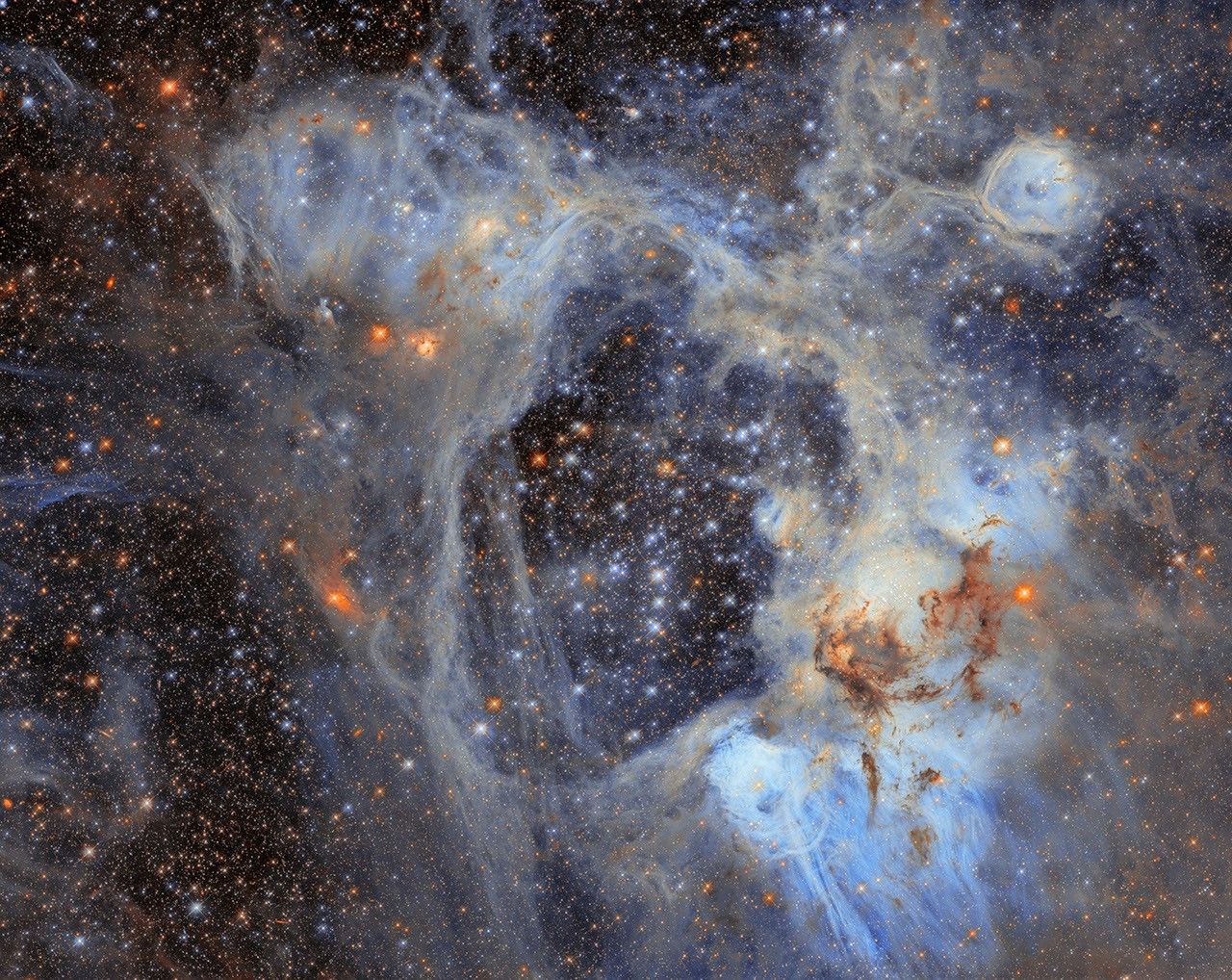
NASA's Hubble Space Telescope has captured a stunning image of a cosmic structure known as N44, a superbubble located in the Large Magellanic Cloud, a satellite galaxy of the Milky Way. This image showcases the vastness and complexity of the universe, featuring intricate details of gas and dust shaped by the powerful winds and radiation from massive stars.
N44 is significant because it provides insights into the life cycle of stars and the processes that shape galaxies. The superbubble is formed by the collective effects of stellar winds from young, massive stars and supernova explosions. These phenomena blow out enormous cavities in the surrounding gas, leading to the formation of new stars. Observations like this are crucial for understanding star formation and the dynamics of galaxies, especially in the context of our own Milky Way.
The Hubble Space Telescope, which has been operating for over three decades, continues to provide valuable data that informs various fields of astronomy. This latest image of N44 not only highlights the telescope's capabilities but also reinforces the importance of long-term space observation for unraveling the mysteries of the universe. The clarity and detail in Hubble's images allow scientists to study the interactions between stars and their environments, leading to new discoveries about the evolution of galaxies.
Looking ahead, NASA plans to use data from Hubble and other telescopes to further explore the nature of superbubbles and their role in galactic evolution. Future observations may include more detailed studies of regions like N44, which can help astronomers understand how star-forming regions influence the overall structure of galaxies. This research is vital for piecing together the history of the universe and our place within it.
Read Full Story at NASA →