NASA scientists find giant 10-sided pattern around Saturn's south pole
NASA scientists have found a giant 10-sided decagon pattern around Saturn's south pole, emerging over the past few years and growing stronger. This discovery is important as it could reshape our unde…
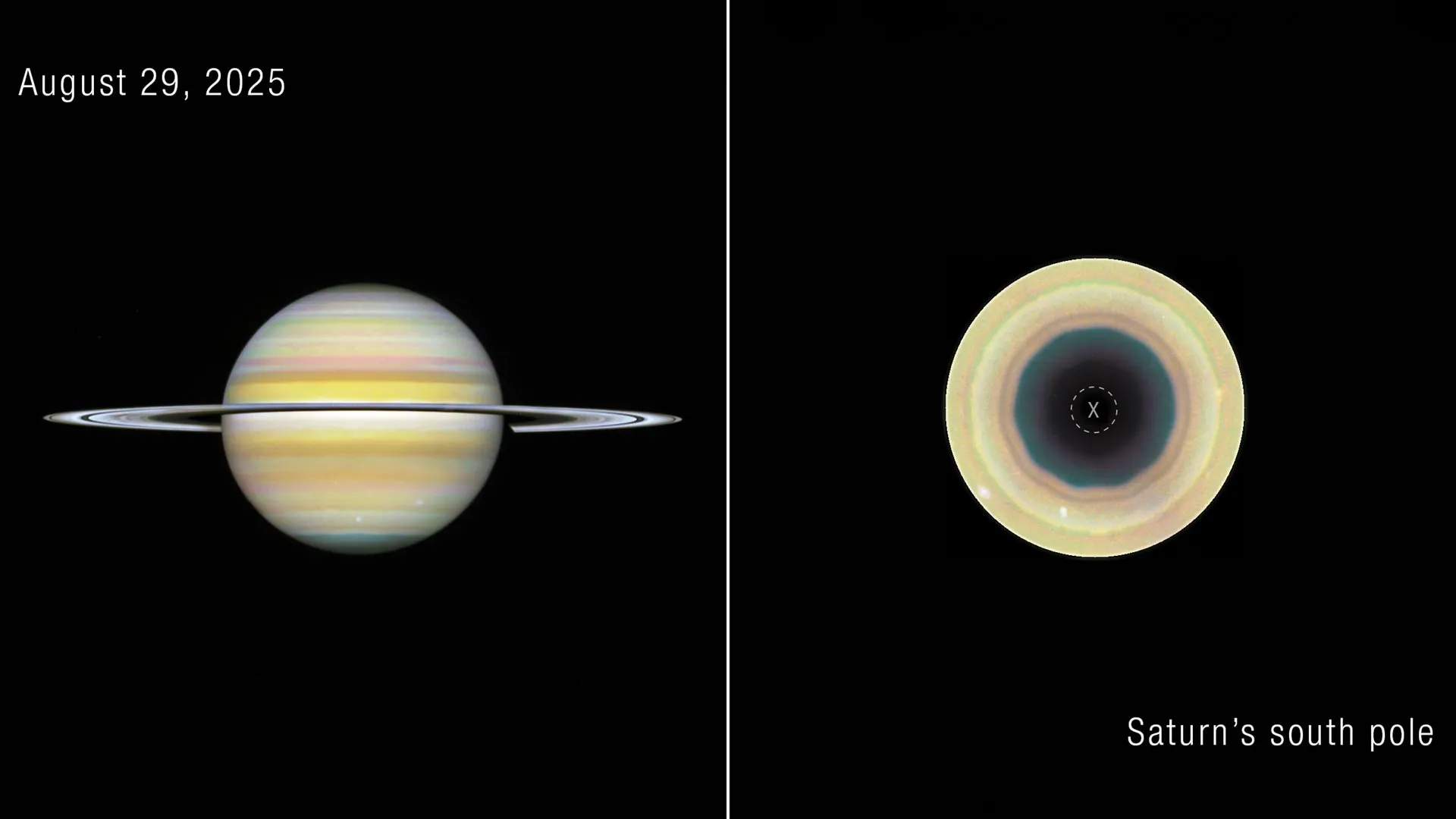
NASA scientists have discovered a giant 10-sided atmospheric pattern, known as a decagon, forming around Saturn's south pole. This intriguing pattern was revealed through data from the Hubble Space Telescope and appears to have emerged only in the past few years. Researchers report that the decagon is growing stronger, prompting questions about its formation and longevity.
The emergence of this decagon is significant as it offers a counterpart to Saturn’s well-known northern hexagon, a six-sided jet stream that has perplexed scientists for decades. The hexagon has been stable for a long time, raising questions about what causes such geometric formations in planetary atmospheres. The sudden appearance of the decagon suggests a shift in Saturn's atmospheric dynamics, which may provide insights into the planet's climate and weather patterns. Understanding these phenomena could help scientists learn more about the dynamics of gas giants, both in our solar system and beyond.
Further analysis of the decagon is underway as researchers aim to observe its development and stability over time. Experts are particularly interested in determining whether this newly formed pattern will persist for decades like its hexagonal counterpart. The ongoing study may reveal the underlying processes that drive atmospheric patterns on Saturn and enhance our understanding of planetary atmospheres.
The discovery of the decagon could have broader implications for planetary science. It may shed light on similar atmospheric phenomena observed on exoplanets, contributing to our understanding of their climates. Scientists are eager to continue monitoring Saturn's south pole, as these findings could redefine our knowledge of gas giants and their complex weather systems.
Read Full Story at ScienceDaily →