OpenAI releases mathematical proofs, sparking debate among mathematicians
OpenAI announced on Tuesday that it has released a large collection of mathematical proofs generated by its GPT‑4 Turbo model, a set the company dubbed the “slop drop.” The release, which includes pr…
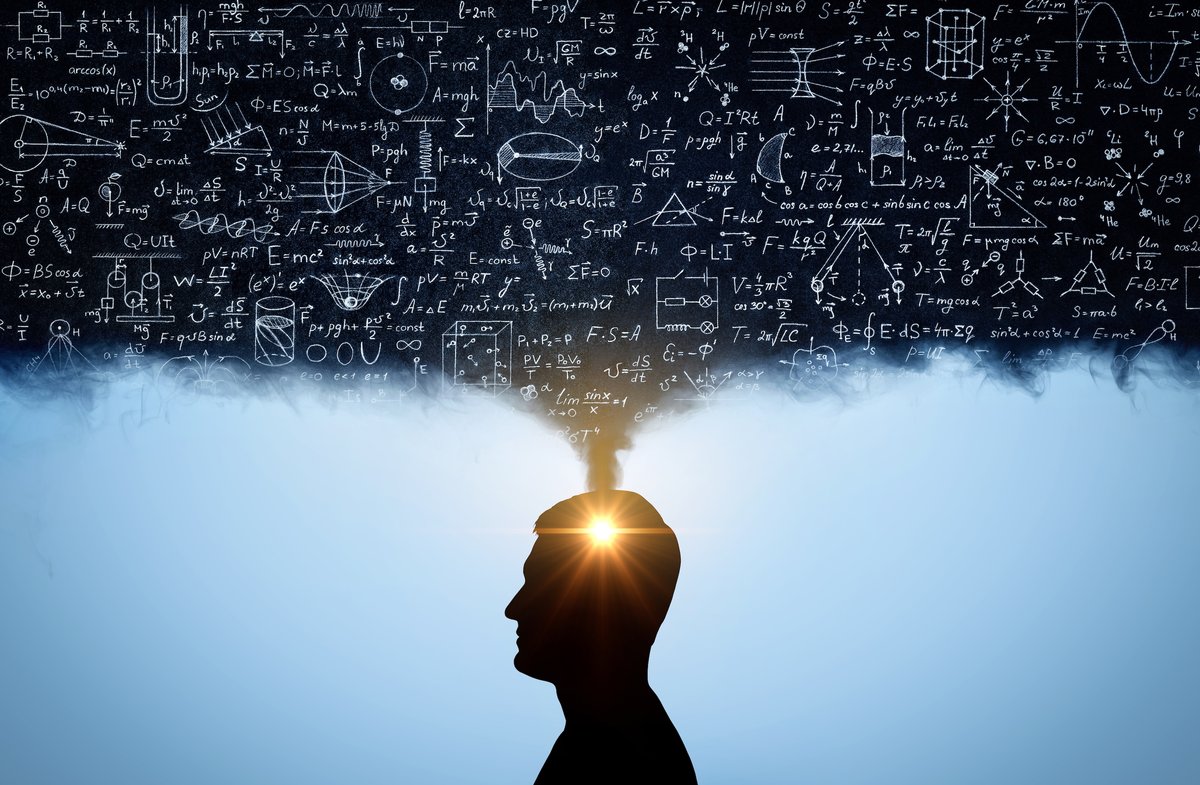
OpenAI announced on Tuesday that it has released a large collection of mathematical proofs generated by its GPT‑4 Turbo model, a set the company dubbed the “slop drop.” The release, which includes proofs of several long‑standing conjectures and new theorems, has sent shockwaves through the mathematical community. While many researchers applaud the speed and creativity of the language model, others are concerned that the proofs were produced without full transparency or independent verification.
The idea that an artificial intelligence can produce rigorous mathematical arguments is not new. In 2022, researchers used GPT‑4 to solve a simple combinatorial problem, and by 2024 the model had demonstrated the ability to sketch proofs of classic theorems such as the pigeonhole principle. The slop drop builds on that progress, showing the model can generate dense, symbolic reasoning in a single prompt. The name “slop drop” was chosen by OpenAI to describe a batch of outputs that were filtered and curated for quality but not fully documented. The release comes at a time when the field is grappling with how to integrate AI tools into formal proof assistants and peer‑review processes.
Mathematicians are both amazed and wary. Some see the slop drop as a potential boon, offering fresh insights and a new way to explore conjectures that have stumped human minds for decades. Others point out that the proofs are produced by a black‑box model whose internal reasoning is opaque. Without the exact prompts, training data, or a clear algorithmic trace, it is impossible to reproduce the results or confirm that the model is not merely parroting known solutions. The community has called for an open‑source release of the code and data that generated the proofs, and for a formal audit of the model’s reasoning steps.
The next few months will likely see a flurry of activity. Independent mathematicians are already attempting to verify the proofs using traditional methods and automated theorem provers. OpenAI has said it will provide a sandbox for researchers to test and critique the outputs, but it has not committed to publishing the underlying training corpus. If the proofs hold up, they could accelerate discoveries in algebraic topology, number theory, and beyond. If not, the episode will underscore the limits of current AI
Read Full Story at Scientific American →