NASA launches Roman Space Telescope to study dark energy and exoplanets
NASA's Nancy Grace Roman Space Telescope launched aboard a SpaceX Falcon Heavy rocket and will travel to Lagrange Point 2 for a five-year mission to study dark energy, dark matter, and exoplanets. It…
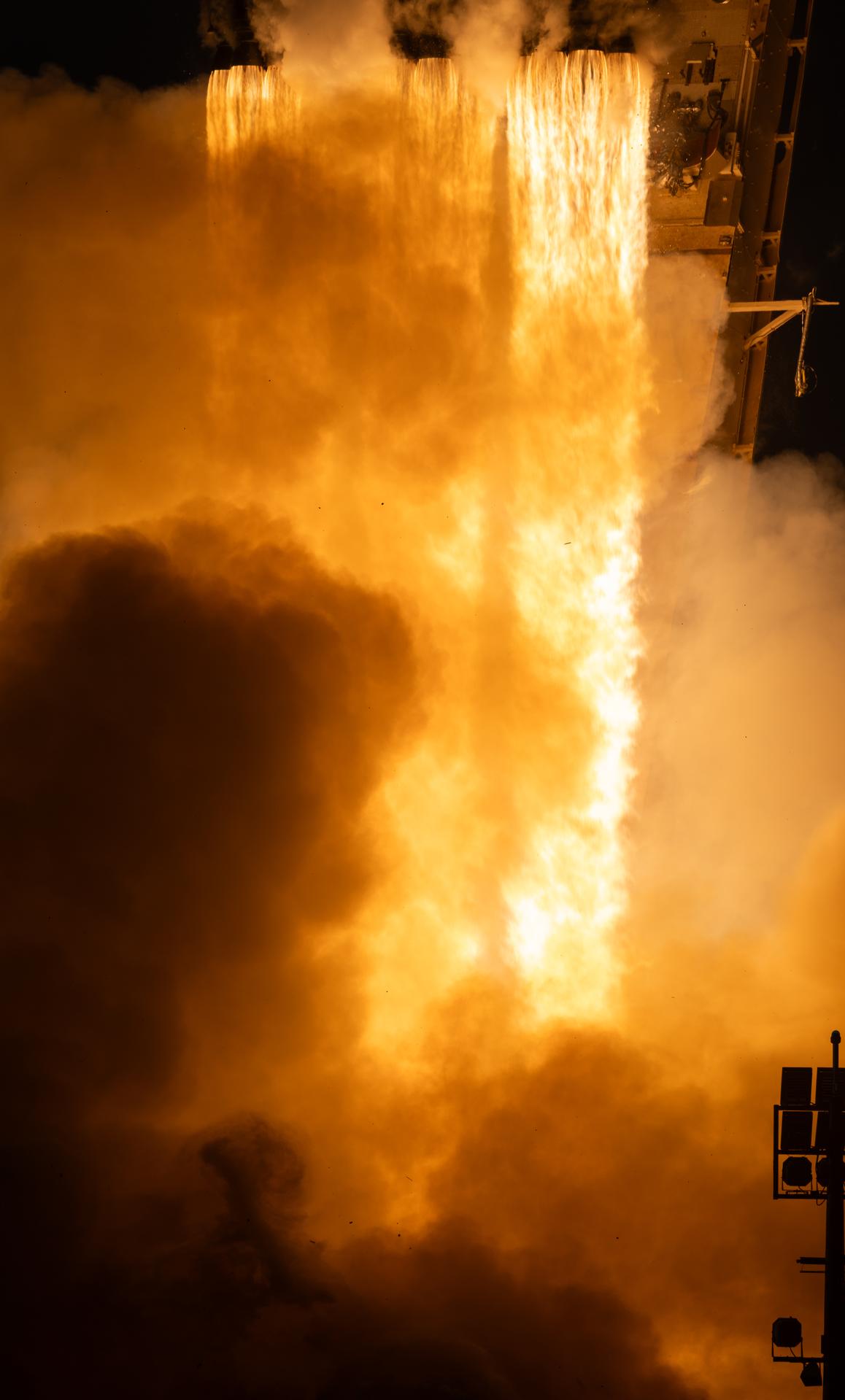
NASA’s Nancy Grace Roman Space Telescope began its million-mile journey to its final orbit on Saturday, launching at 7:26 a.m. EDT from Kennedy Space Center in Florida aboard a SpaceX Falcon Heavy rocket.
The telescope is named after Nancy Grace Roman, a NASA astronomer known as the "Mother of Hubble" for her role in planning the Hubble Space Telescope. Roman will study the universe’s darkest mysteries, including dark energy and dark matter, which together make up 95% of the universe but remain poorly understood. It will also search for exoplanets and explore the formation of galaxies, building on Hubble’s legacy with a field of view 100 times wider.
Over the next three months, Roman will travel to Lagrange Point 2, a stable orbit a million miles from Earth where it can operate with minimal interference. Once in position, it will begin a five-year mission, using its advanced infrared instruments to capture unprecedented images of the cosmos. Scientists expect it to revolutionize our understanding of the universe’s expansion and the structure of space-time.
The mission marks a major step forward in space exploration, complementing the James Webb Space Telescope by observing larger swaths of the sky. Its findings could reshape astrophysics, offering new insights into the forces shaping our universe.
Read Full Story at NASA →