I thought losing Flex Mode would ruin the Galaxy Z Fold 8 — I was completely wrong
When I first heard of Samsung’s plans to make a wide Galaxy Z Fold 8 , I knew I’d want one in my pocket. The 16:10 cover screen and 4:3 main screen aspect ratios sounded perfect for widescreen conten…
Affiliate links on Android Authority may earn us a commission. Learn more.
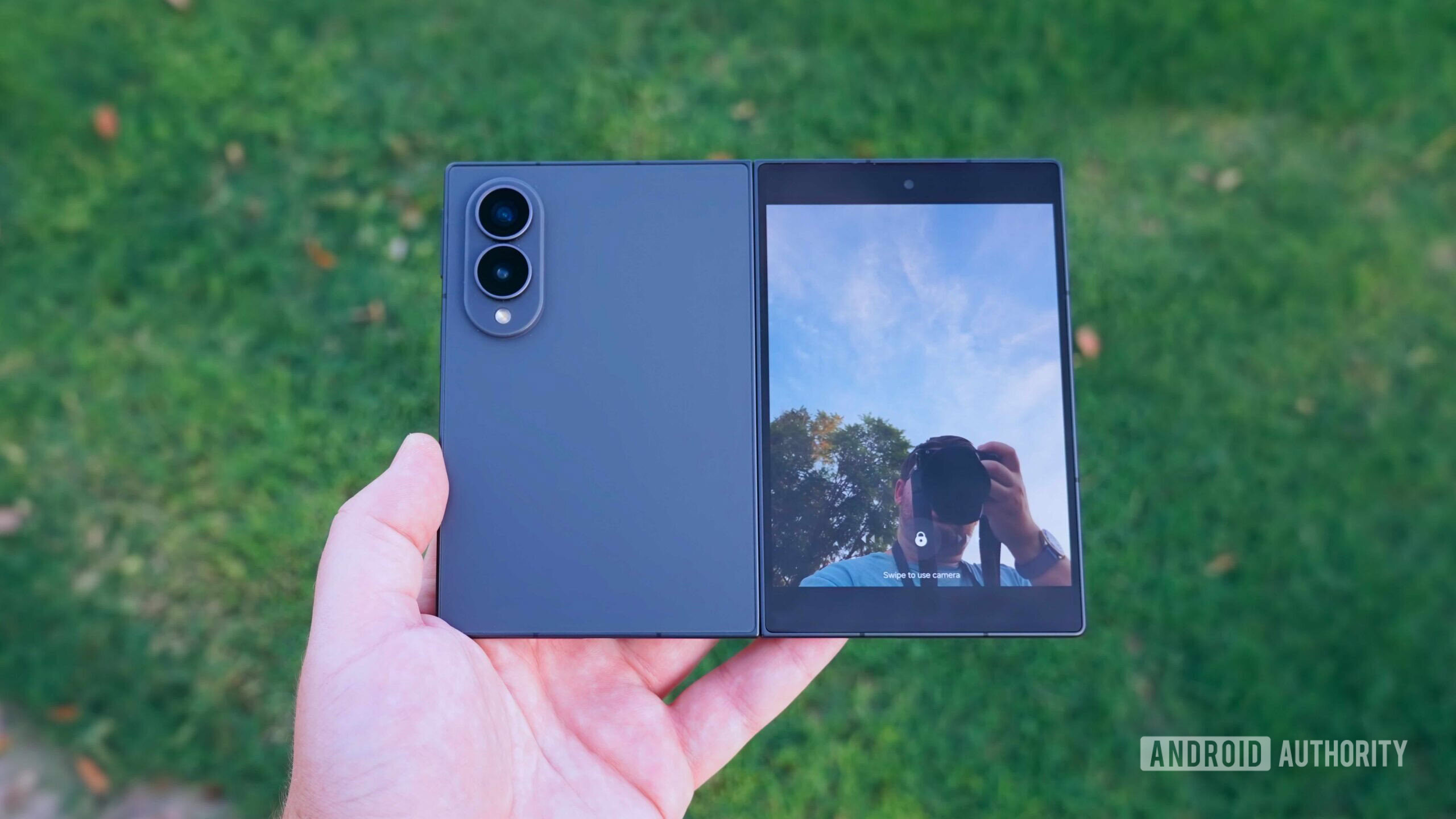
When I first heard of Samsung’s plans to make a wide Galaxy Z Fold 8 , I knew I’d want one in my pocket. The 16:10 cover screen and 4:3 main screen aspect ratios sounded perfect for widescreen content consumption, and made for a compact form factor when shut. Before I bought a Galaxy Z Fold 8 for myself, I skimmed the spec sheet and looked for any notable downgrades. Neither the slightly smaller battery nor the rear dual-camera system disappointed me, but the lack of Flex Mode initially stunned me.
Flex Mode allows you to prop up a foldable like a laptop. It uses a mix of hardware that keeps the hinge in a fixed position and software that makes the most of the split-screen UI. I’ve been using Flex Mode on Samsung foldables since the Galaxy Z Flip 3, and it became my preferred way to watch videos on a table or desk.
The wide Galaxy Z Fold 8 leaves Flex Mode behind because of a tweak to the hinge, and I worried it’d ruin what was otherwise my dream foldable. Instead, the new Galaxy Z Fold 8 hinge ended up being my favorite thing about it.
The hinge on older Samsung foldables was excellent at holding itself in place. You could open the Galaxy Z Fold 7 about halfway and enjoy a split-screen experience in Flex Mode. The hinge remained in a fixed position, and One UI added intuitive software features tailored to the laptop-like mode. For example, the bottom half housed media controls while the top half played videos. Another feature turned the bottom half of a Galaxy Z Fold or Galaxy Z Flip device into a virtual trackpad, leaving the top half reserved for One UI. This year, only the Galaxy Z Fold 8 Ultra retains Flex Mode support.
Initially, I feared the Galaxy Z Fold 8 lacked Flex Mode support merely to help differentiate it from the Galaxy Z Fold 8 Ultra. This would’ve been frustrating as a Galaxy Z Fold 8 buyer. Instead, the feature is missing because the Galaxy Z Fold 8 has a new hinge that works differently from the one on older Galaxy foldables and the Galaxy Z Fold 8 Ultra. Samsung says that a new titanium-based display structure, refined hinge mechanics, and magnetic force “make unfolding feel smoother, lighter and more natural.”
In practice, the changes mean that the Galaxy Z Fold 8 is significantly easier to open. As you unfold the Galaxy Z Fold 8, your fingers and hands are doing all the work for roughly the first three-quarters of the way open. You’re fighting the hinge mechanism’s own resistance. What’s new is that as soon as you cross the 75% threshold and the phone is almost fully open, the hinge snaps into place. After that point, the hinge mechanics and magnetic force are doing all the work for you.
If you haven’t used the Galaxy Z Fold 8 yourself, picture what it’s like to use a car’s steering wheel. As soon as you move the wheel to make a turn, you can loosen your grip on the wheel, and it’ll return to the center position on its own. You’re moving the wheel to cause the car to turn, but it takes virtually no effort of your own for the wheel to come back to you. The opening process for the Galaxy Z Fold 8 feels similar. You have to start unfolding the phone yourself, but the hinge finishes the job.
Read Full Story at Android Authority →