Europe's summer heat and drought cut crop yields, threaten food security
This summer's record heat and drought in Europe caused significant crop yield declines, with wheat in France down 20%, barley in Spain down 15%, and maize in Germany down 12%. This crisis threatens E…
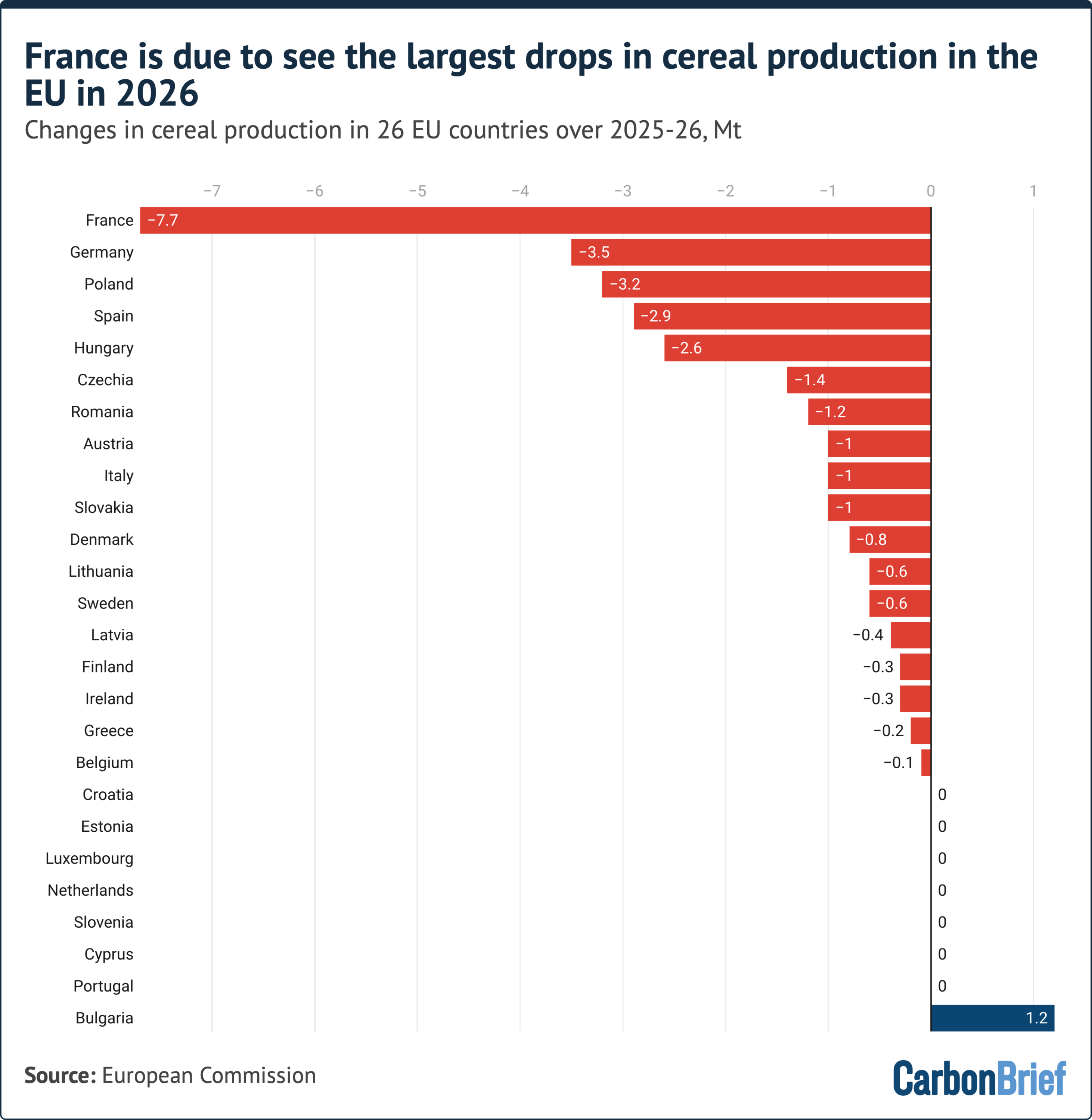
This summer, record heat and drought across Europe have left farmers scrambling to salvage crops, with the latest data showing a steep decline in yields for wheat, barley and maize. Carbon Brief’s six charts reveal that in France, wheat output fell by 20 %, in Spain barley dropped 15 % and in Germany maize was down 12 %. The figures are drawn from satellite imagery and farm surveys that cover the entire continent from the Atlantic to the Black Sea.
The crisis is part of a broader pattern of increasingly extreme weather that the European Union has warned about. Heatwaves have pushed temperatures above 35 °C for weeks in many regions, while water‑supply systems have struggled to meet irrigation needs. The 2023 drought was the driest on record in several Mediterranean countries, and wildfires in Portugal, Greece and Italy have destroyed hectares of farmland. These events are linked to a warming climate that makes heatwaves more frequent and severe, and they threaten the EU’s food security and rural economies.
Farmers are reporting that the loss of seed‑sowing windows and the need to abandon crops early have pushed costs higher. In Spain, a farmer said his barley field was cut in half because the soil dried out too quickly. The EU’s statistical office, Eurostat, estimates that the loss in grain production could cost the continent up to €2 billion this season. Prices for wheat and barley have already risen by 10 % in the last month, and traders warn that the shock could ripple into global markets, especially in countries that import large volumes of European grain.
Governments are looking for ways to cushion the blow. The European Commission is reviewing its Common Agricultural Policy to increase drought‑resilience subsidies and expand crop‑insurance schemes. Researchers are testing heat‑tolerant seed varieties, while some farmers are turning to drip irrigation and soil‑moisture monitoring. The next harvest will be watched closely; if the drought persists, the EU may need to import more grain to keep prices stable and protect food security for millions of consumers.
Read Full Story at Carbon Brief →