Romans engineer 250-mile Aqueduct of Valens to transport water to Constantinople.
The Romans built aqueducts to transport water over long distances, such as the 250-mile Aqueduct of Valens to Constantinople, utilizing advanced engineering techniques and precise surveying tools. Th…
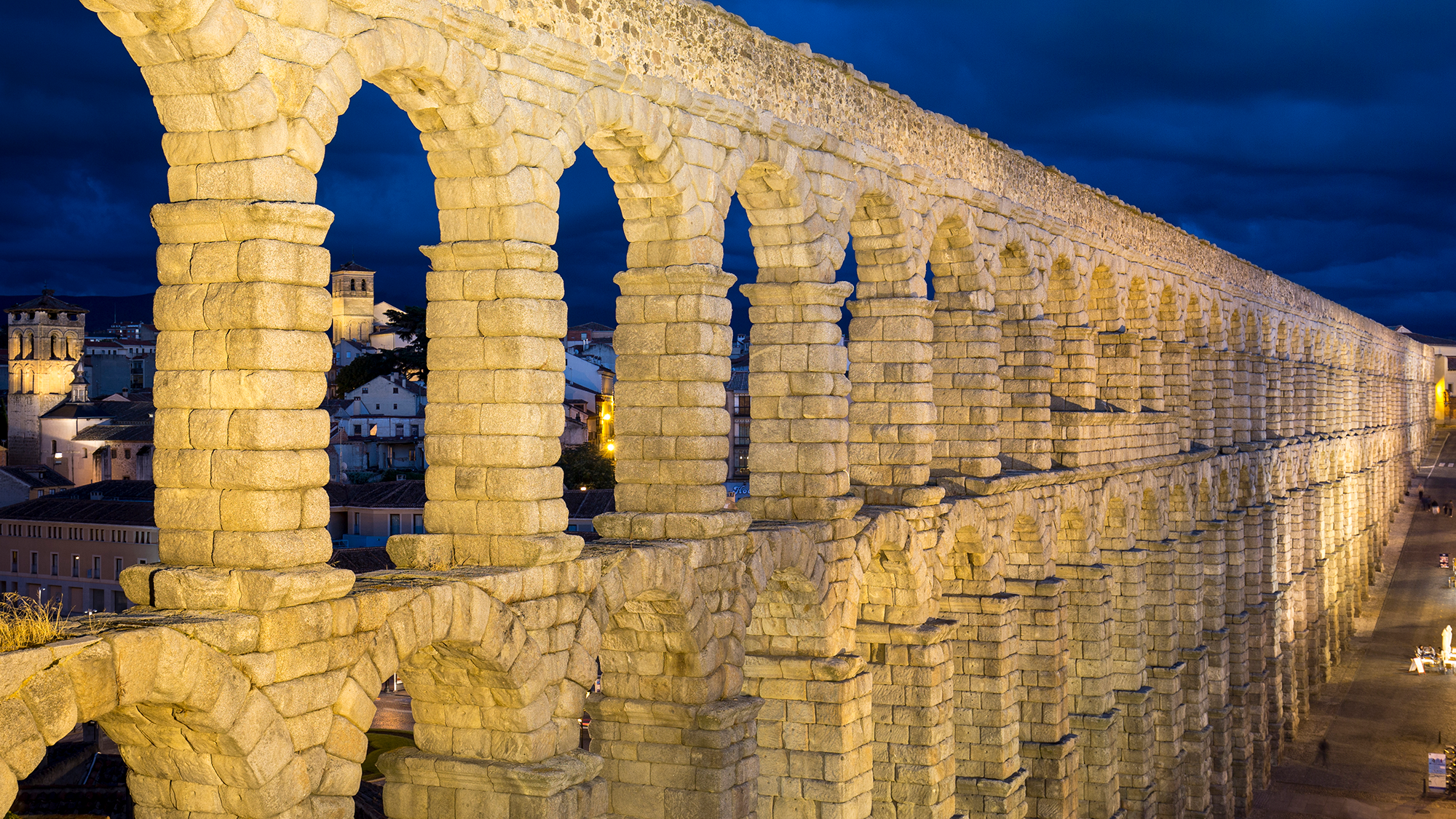
The Romans engineered impressive aqueducts that supplied water to cities and settlements across their empire, showcasing their advanced architectural skills and innovative techniques. One of the most remarkable examples is the Aqueduct of Valens, which transported water over an astonishing 250 miles to Constantinople, now known as Istanbul. These structures not only served essential functions in daily life but also have endured through the centuries, offering a glimpse into the Romans' remarkable engineering capabilities.
The construction of these aqueducts was driven by the need for reliable water sources in rapidly growing urban areas. As cities expanded, the demand for fresh water increased, prompting Roman engineers to devise solutions that could transport water over long distances. The aqueducts were designed with a slight downward incline, allowing gravity to carry water from springs to its final destination. Ann Olga Koloski-Ostrow, a classics professor at Brandeis University, explains that this gradual slope was crucial for maintaining a steady flow of water.
Roman surveyors played a vital role in determining the precise routes for these aqueducts. They utilized tools like the dioptra, a sighting instrument with a disc and bar, to measure elevations and ensure the correct gradient. Joseph Lewis, an archaeologist at the University of Cambridge, notes that this device enabled surveyors to align the aqueducts accurately. Another tool, the libra, helped them assess differences in ground height. The combination of these surveying techniques allowed the Romans to navigate challenging terrains and choose stable geological formations for their aqueducts.
The durability of Roman aqueducts is also attributed to their unique construction materials. The Romans used a special form of concrete that incorporated pozzolan, a volcanic ash, which made it more resilient than many modern concretes. Giovanni De Feo, a professor at the University of Salerno, highlights that the combination of high-quality materials and careful planning contributed to the exceptional longevity of these structures. As a result, many Roman aqueducts still stand today, serving as monumental reminders of the empire’s engineering prowess and its lasting impact on urban infrastructure.
Read Full Story at Live Science →