Research reveals sticky marine snow transports six times more carbon.
Research shows that stickier marine snow can carry over six times more carbon to the deep ocean than less sticky particles, highlighting its crucial role in carbon sequestration. This insight could e…
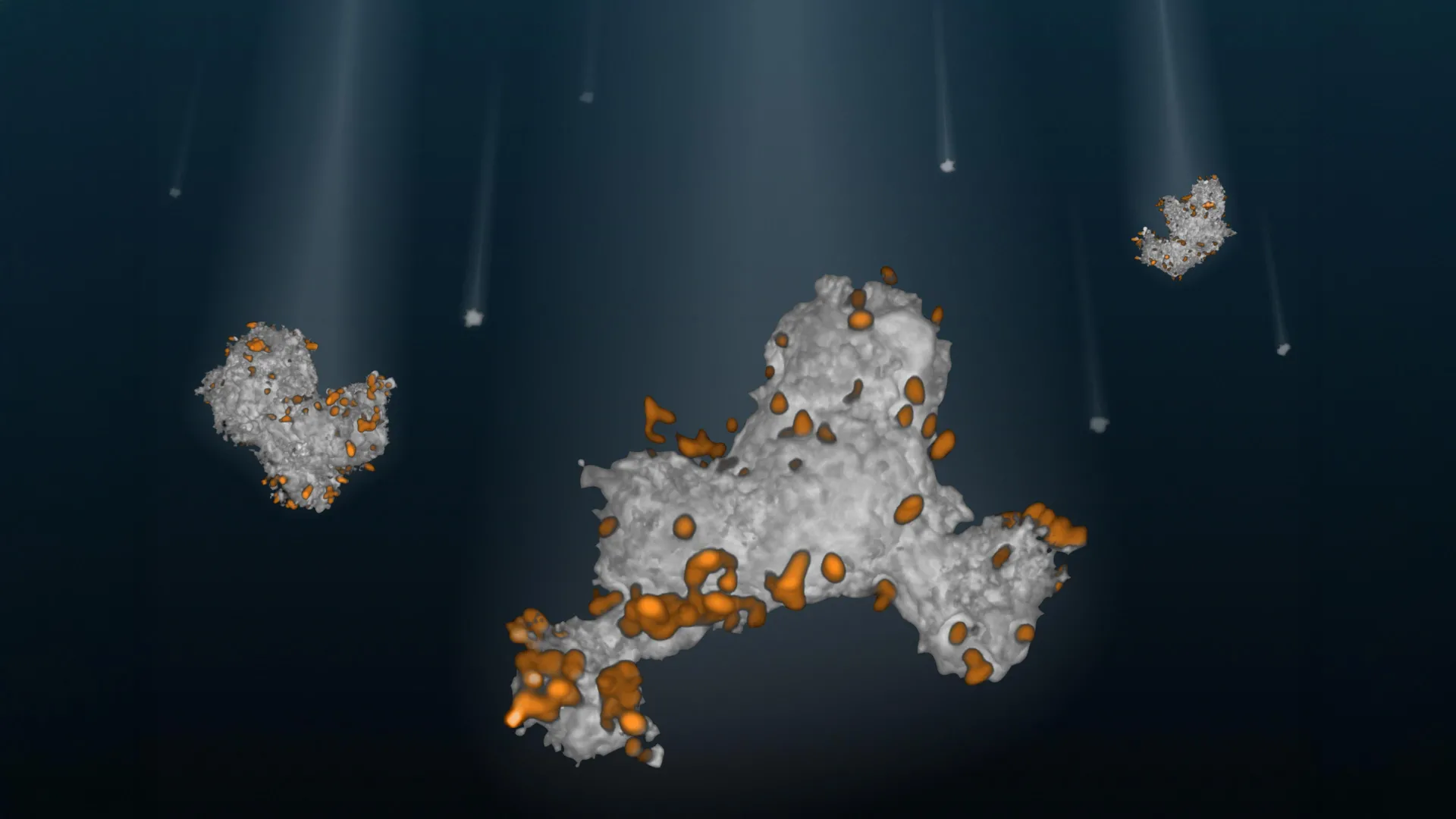
Scientists have discovered that the stickiness of underwater “marine snow” significantly influences how much carbon is transported to the deep ocean. This finding reveals that gooier particles can resist bacterial breakdown and carry over six times more carbon than those that are less sticky. The research highlights an unexpected relationship between ocean slime and the Earth's climate system, raising new questions about how marine processes impact global warming.
This discovery is timely as the world grapples with the urgent need to understand and mitigate climate change. The oceans play a critical role in sequestering carbon, absorbing approximately a quarter of the carbon dioxide emitted by human activities. However, much remains unknown about the mechanisms that facilitate deep ocean carbon storage. Understanding how marine snow's texture affects its ability to transport carbon could offer valuable insights into the ocean's carbon cycle and its role in climate regulation.
The researchers conducted experiments that examined how varying degrees of stickiness in marine snow affected its degradation by bacteria. They found that stickier particles not only survive longer in the water column but also transport more carbon to the depths, where it can be stored for centuries. This suggests that changes in ocean conditions, such as temperature and nutrient levels, could alter the production and composition of marine snow, potentially impacting carbon storage capacity.
Looking ahead, these findings could inform climate models and marine conservation strategies. As scientists continue to study the implications of marine snow, the results could lead to improved predictions of how much carbon the oceans can store as climate change progresses. Understanding these dynamics is crucial for developing effective policies to address global warming and protect marine ecosystems. The connection between marine snow and carbon sequestration is a reminder of the intricate systems at play in our oceans and their vital role in regulating the Earth's climate.
Read Full Story at ScienceDaily →