HDMI splitter vs. HDMI switch: How are they different?
These devices let you turn one HDMI input or output into many, but not all are created equal. In a perfect world, we'd have exactly as many video ports on our source devices as we do on the displays…
These devices let you turn one HDMI input or output into many, but not all are created equal.
In a perfect world, we'd have exactly as many video ports on our source devices as we do on the displays we're connecting them to. But that's rarely the case, even with newer TVs that offer four HDMI ports. HDMI splitters and switches help with this problem, and while the two sound interchangeable, they actually have opposite purposes.
If you have a simple setup with one game console and a set-top box (like a Roku) connected to your TV, you likely don't need to worry about splitters or switches. But if you juggle cables behind your entertainment center all the time because you have more devices than HDMI ports, a switch will help you out greatly. Splitters are less relevant for home use, but they can still help in some situations.
Understanding the differences between switches and splitters is especially important, since the two products look so similar.
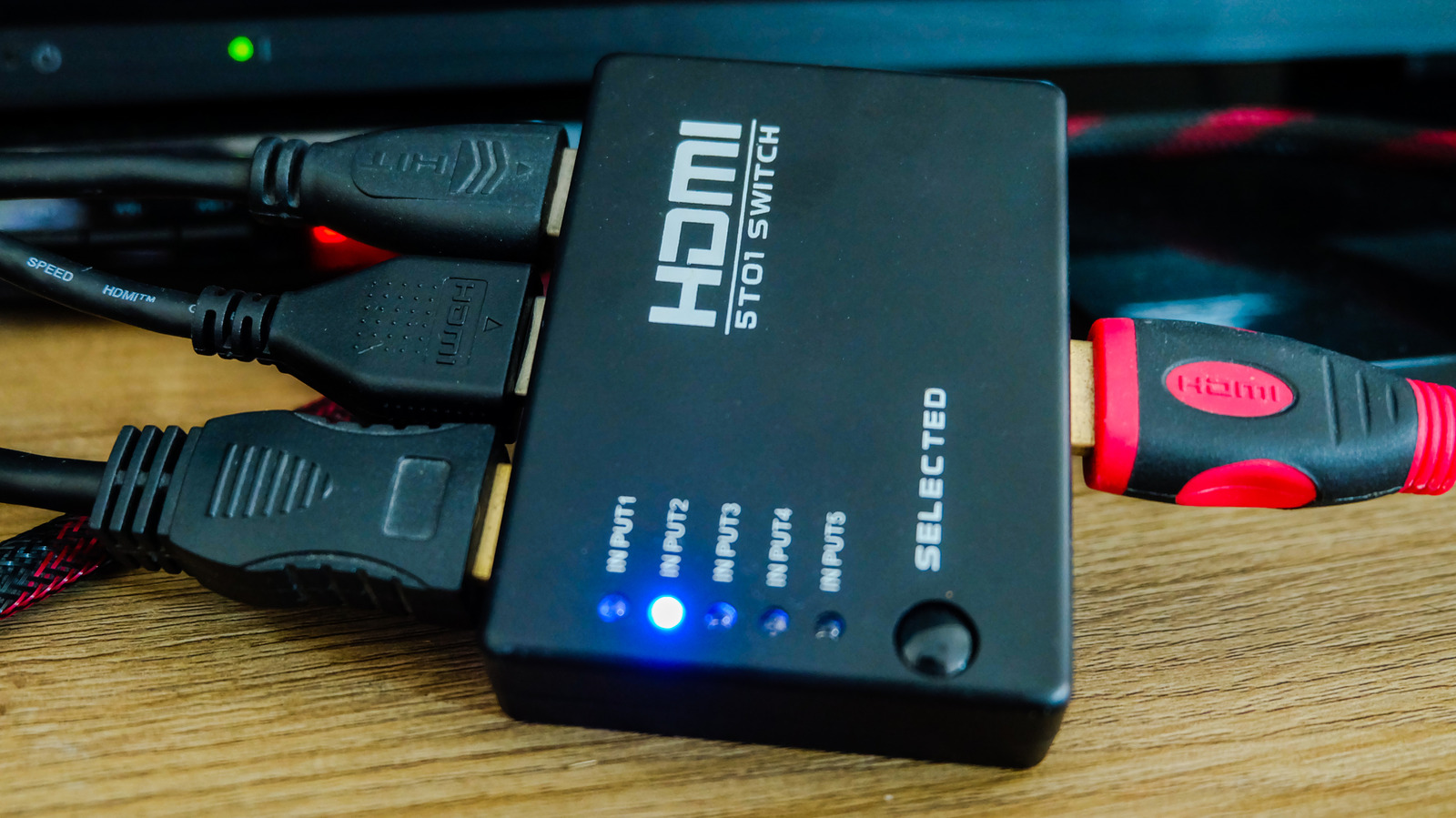
Let's start with the type you're more likely to use. HDMI switches, like network switches, allow you to connect more HDMI devices to your TV than you can out of the box. If your TV only has two ports but you want to have four gadgets hooked up, you connect a switch to one port on your display, then plug the other units into the switch. The TV sees this as a single input, while the switcher handles which one outputs to the screen.
This way, you avoid having to unplug video cables to make room for others all the time. Along with the convenience, it also reduces wear and tear on the port. It's not great for an HDMI port to constantly have a connector plugged and unplugged; plus, the more often you do this, the higher the chance that you'll pull it out improperly. If a switch wears out from constant connections, it's much cheaper to replace. As a bonus, it also reduces headaches if it's difficult to reach behind your television to swap cables.
Switches change inputs through automatic detection, buttons on the unit and/or a remote. Auto-swapping is convenient, but it can also happen when you don't want it to. Nearly every device today stays in a low-power mode to download updates and provide instant availability, which can confuse switches. Definitely get a model with a remote, since getting up to change the signal every time is no fun.
When you buy an HDMI switch (or a splitter), you must also check the standards it supports. While HDMI 2.2 is the latest version at the time of writing , it's not widely in use yet. Instead, you should opt for an HDMI 2.1 model . This supports 4K output at 120Hz, along with important features like dynamic HDR, variable refresh rate, and auto low latency mode.
Read Full Story at Engadget →