Astronomers confirm existence of green, pink, and purple stars
Astronomers have confirmed the existence of green, pink, and purple stars, identified through data from the Gaia mission and ground-based surveys. This discovery challenges conventional models of ste…
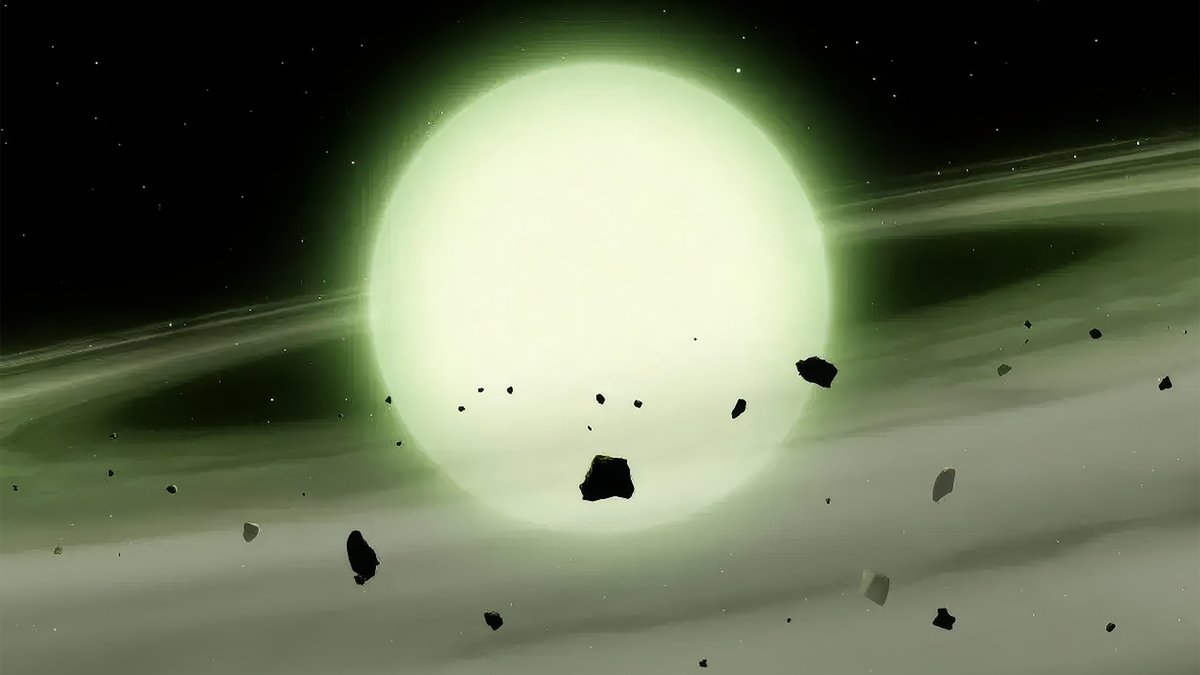
Astronomers have confirmed that a handful of stars shine green, while others display vivid pink or purple hues, a finding reported this week in Scientific American and based on data from the European Space Agency’s Gaia mission and ground‑based spectroscopic surveys. The team, led by researchers at the University of Cambridge, identified the unusual colors by cross‑matching Gaia’s precise brightness measurements with spectra from the Sloan Digital Sky Survey, finding that the stars’ light is dominated by narrow emission lines rather than the broad black‑body glow that gives most stars their familiar white, yellow or red appearance.
The discovery matters because a star’s color is a primary clue to its temperature, composition and evolutionary stage. Conventional models predict that stars should not appear green; a black‑body spectrum that peaks in the green part of the spectrum is quickly balanced by surrounding wavelengths, making the star look white to the eye. The green, pink and purple stars, however, are not hotter or cooler than normal stars; they are instead emitting strong, isolated spectral lines from ionised elements such as oxygen, neon and carbon, which give the human eye a perception of those vivid hues. This challenges the simplistic link between colour and temperature and underscores the importance of detailed spectroscopy in stellar classification.
The researchers say the green stars are likely young, massive objects surrounded by dense, ionised gas clouds that filter and re‑emit light at specific wavelengths. The pink and purple examples appear to be older, cooler stars whose atmospheres contain unusual abundances of heavy elements, causing complex molecular bands that shift the perceived colour. Early reactions from the astrophysics community have been enthusiastic but cautious, noting that while the observations are robust, the underlying mechanisms will require sophisticated modelling to untangle the interplay of stellar winds, magnetic fields and surrounding nebular material.
Future work will focus on high‑resolution spectroscopy with the James Webb Space Telescope and next‑generation ground‑based observatories to map the chemical fingerprints of these stars in greater detail. By cataloguing more examples, scientists hope to refine models of stellar atmospheres and improve our understanding of how stars interact with their environments. If the findings hold, they could reshape textbook diagrams of the Hertzsprung‑Russell chart, adding a new spectrum of colour to the story of how stars live and die.
Read Full Story at Scientific American →