Archaeologists discover Denisovan fossils and tools in China's Bianfu Cave
Archaeologists have found evidence of Denisovans inhabiting Bianfu Cave in southwestern China for over 100,000 years, including five fossils and stone tools. This discovery enhances understanding of …
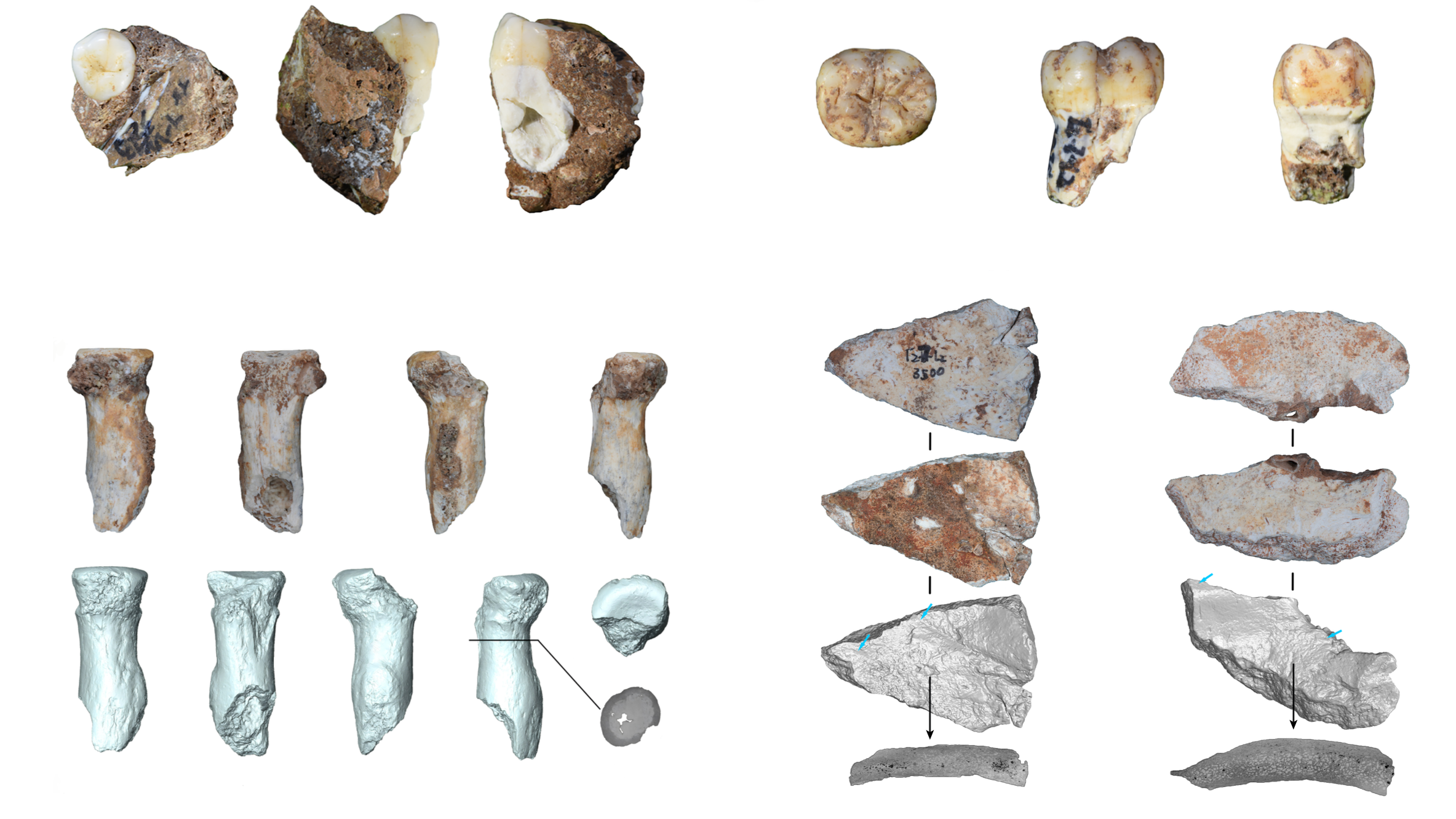
Archaeologists have uncovered a cave in southwestern China that was inhabited by Denisovans for over 100,000 years. The findings include five human fossils, numerous stone tools, and an extensive collection of animal bones. This discovery sheds light on the lives of these ancient humans, who thrived in a forested environment and hunted large game.
The excavation at Bianfu Cave, located in Yunnan province, reveals a rich history of Denisovan activity dating from 190,000 to 70,000 years ago. Previous evidence of Denisovans has been sparse, with only a handful of fragmentary fossils found across regions from Siberia to Laos. This scarcity has hindered researchers' understanding of their physical characteristics and cultural practices. The recent findings provide crucial evidence that helps clarify the timeline of Denisovan existence and their interactions with other human species.
In two studies published in the journal Nature, researchers detailed their methods for identifying the remains. Using a technique called zooarchaeology by mass spectrometry (ZooMS), they screened bone fragments to determine their species. This analysis revealed that certain bones and teeth found in the cave belonged to Denisovans, marking a significant advancement in the understanding of this enigmatic lineage. Notably, one of the identified bones was a radius, the first of its kind ever discovered from Denisovans.
The implications of these findings are profound. They provide a glimpse into the daily lives of Denisovans and their environment, as well as their interactions with other hominins, including modern humans. As more research is conducted in Bianfu Cave, scientists hope to uncover additional insights into how Denisovans lived, adapted, and ultimately thrived in a changing world. This discovery not only enriches our understanding of human evolution but also highlights the complex tapestry of interactions among ancient human species.
Read Full Story at Live Science →