Researchers synchronize time crystals over 40 micrometers using spin-polarized electrons
Researchers found that time crystals in a semiconductor can synchronize their oscillations over distances up to 40 micrometers, using spin-polarized electrons as a coupling mechanism. This discovery …
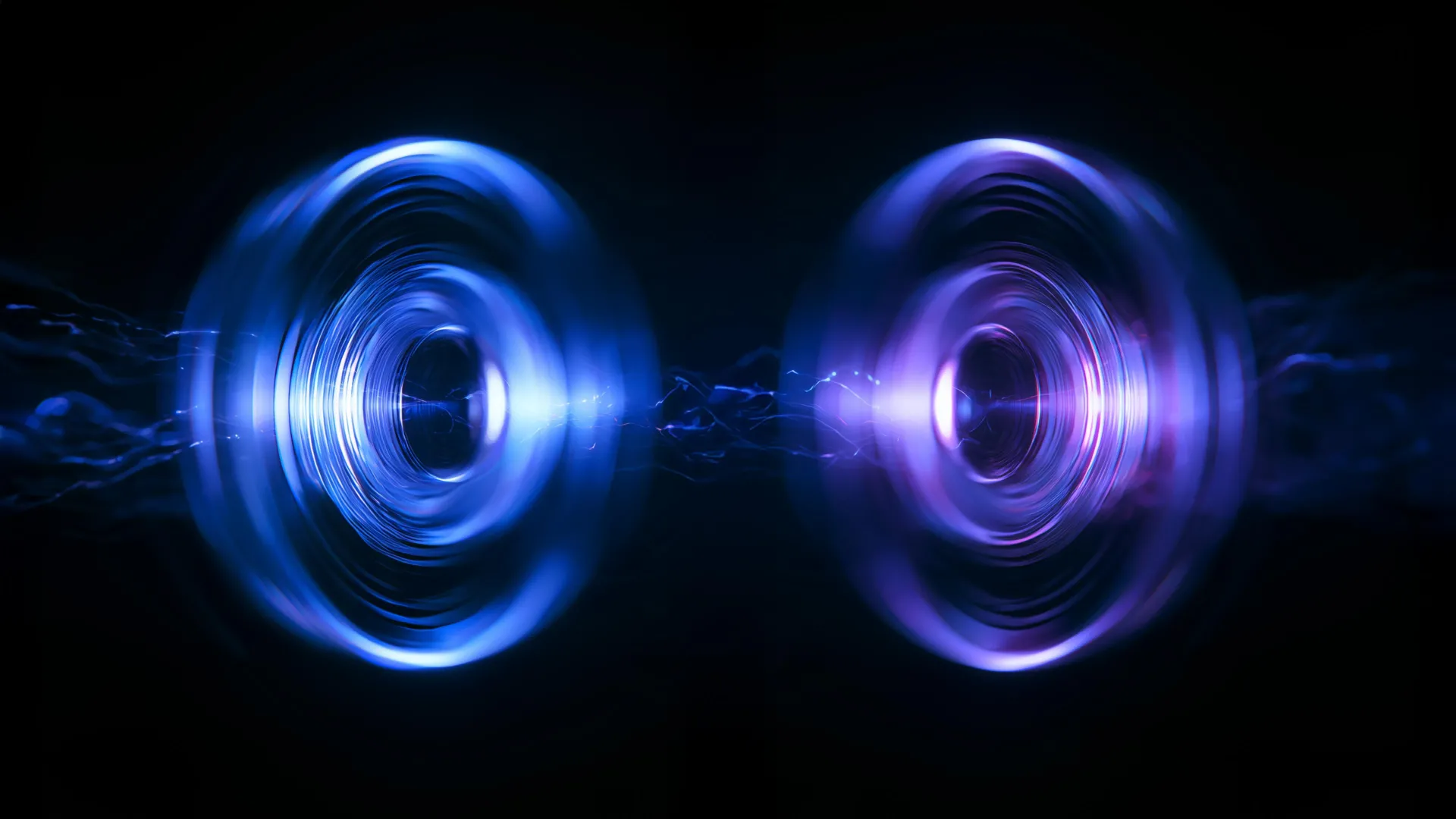
Researchers have discovered that time crystals within a semiconductor can synchronize their oscillations, even when separated by distances of up to 40 micrometers. This phenomenon is similar to how pendulum clocks gradually align to a common rhythm. The synchronization occurs through the interaction of spin-polarized electrons, which act as a coupling mechanism between these distant time crystals.
This breakthrough is significant as it sheds light on the long-range connections that exist within these unique spin systems. Time crystals are a relatively recent discovery in the field of quantum physics and represent a state of matter that can maintain periodic motion without energy input. The timing of this research is particularly relevant in the context of advancing quantum computing and spin-based technologies, which rely on manipulating these exotic states for practical applications.
The implications of this research could be profound. By demonstrating that time crystals can lock into a common frequency over considerable distances, scientists can explore new ways to harness their properties for future devices. This could lead to enhancements in quantum computing capabilities, potentially making systems faster and more efficient.
As researchers continue to investigate time crystals, this synchronization discovery may pave the way for novel technological advancements. Understanding how these systems interact opens doors to innovations that could revolutionize computing and information processing in the years to come. The ability to control and utilize time crystals could lead to applications that transform how we approach technology and quantum systems.
Read Full Story at ScienceDaily →