Collapsed glacier likely caused devastating Nepal-Tibet floods, scientists say
Preliminary investigations have pointed to a collapsed glacier as the cause of the flash flood on the Nepal-Tibet border, highlighting the issue of rapidly melting Himalayan ice, scientists have told…
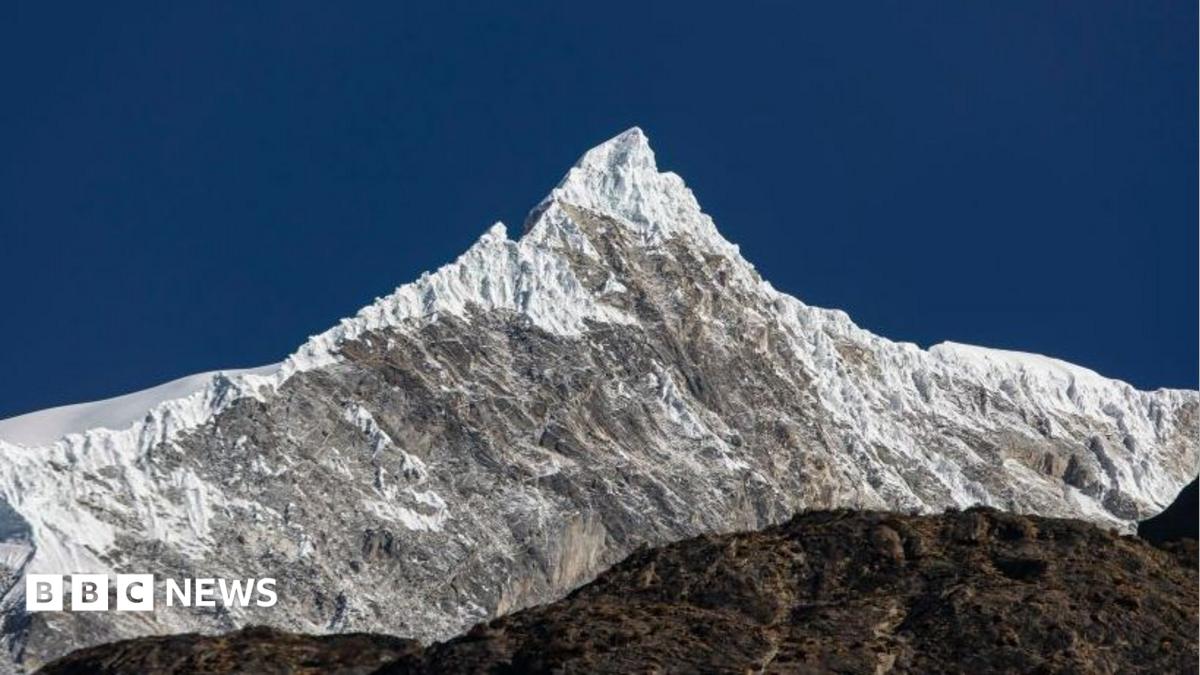
Preliminary investigations have pointed to a collapsed glacier as the cause of the flash flood on the Nepal-Tibet border, highlighting the issue of rapidly melting Himalayan ice, scientists have told the BBC.
Initial reports of an earthquake led many to believe that a tremor had caused a landslide, which in turn caused the flood that has killed at least 177 people.
However, the US Geological Survey then clarified that the disaster was caused by a "glacial collapse", which is when a glacier or part of a glacier disintegrates.
The impact of the collapsed glacier hitting the bottom of a valley was so powerful that it registered a magnitude of 5.2, according to USGS data and scientists who have analysed the event.
Dr Simon Cook, a glacier expert with the University of Dundee, told the BBC his team had detected that the lower part of a glacier in Nepal near the Langtang Lirung peak - which is approximately 15km (9 miles) west of the site of the floods - had collapsed.
He estimated that the glacier collapsed in a northwesterly direction and then travelled westwards downstream.
An analysis , external by the International Centre for Integrated Mountain Development (ICIMOD), an intergovernmental scientific institution, found there could have been "an ice-rock avalanche originating from a high-altitude area".
This caused a "large volume of ice and rock debris" to enter the Lende Khola, a tributary of the Bhote Koshi river, which in turn generated a sudden surge in the river carrying water, sediment and large boulders downstream.
Read Full Story at BBC World News →