Citing the 'Deep State,' Trump overhauls the intelligence community
President Trump monitors U.S. military operations in Venezuela with Defense Secretary Pete Hegseth (left) and CIA Director John Ratcliffe (center) at Mar-a-Lago in Palm Beach, Fla., on Jan. 3. U.S. f…
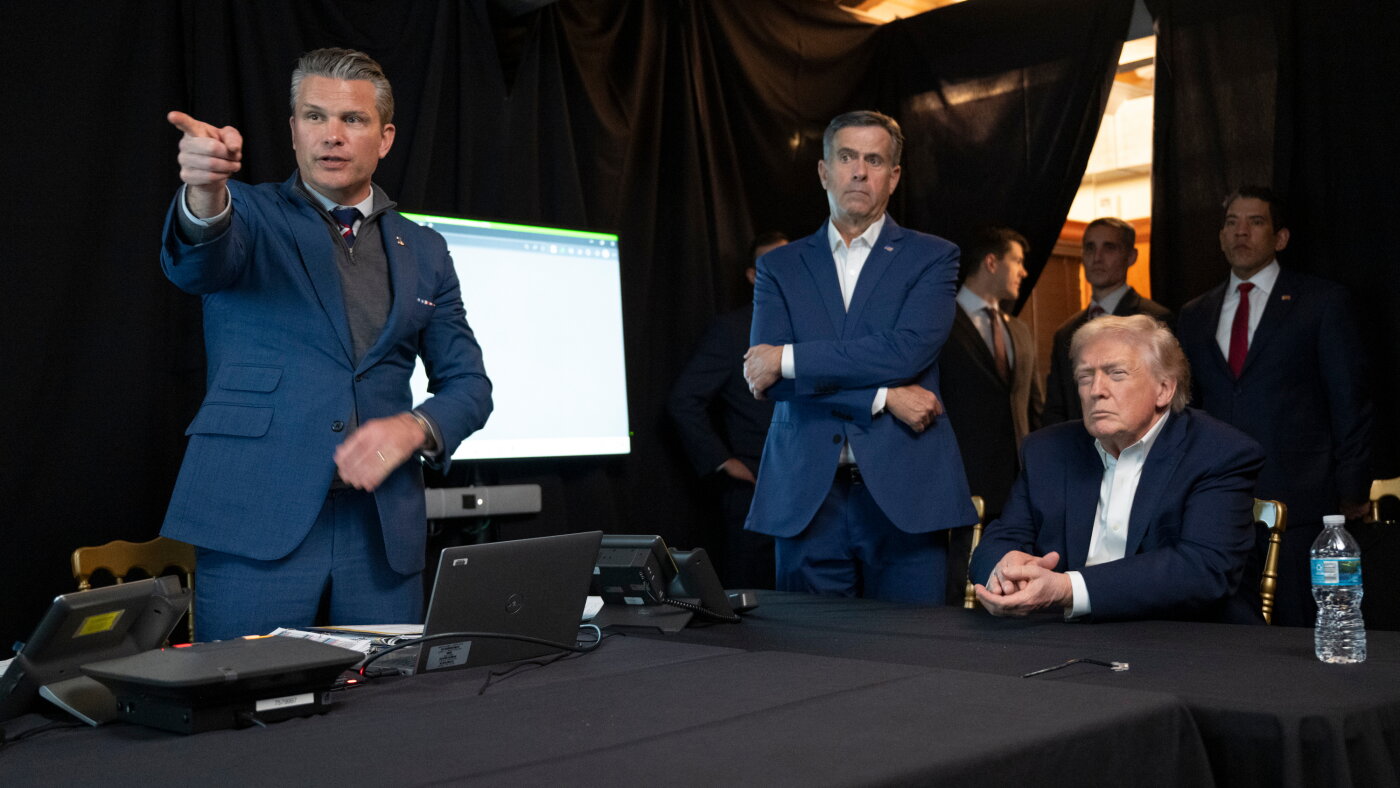
President Trump monitors U.S. military operations in Venezuela with Defense Secretary Pete Hegseth (left) and CIA Director John Ratcliffe (center) at Mar-a-Lago in Palm Beach, Fla., on Jan. 3. U.S. forces captured Venezuela's leader Nicolas Maduro and brought him to New York where he faces criminal charges. Molly Riley/AP via The White House hide caption
John Sipher spent nearly three decades at the CIA focused on the Russians, a core part of the agency's mission. That changed dramatically after the al-Qaida attacks on Sept. 11, 2001.
"Frankly, tracking and hunting terrorists, finding people, finding a needle in a haystack was not something that we trained for," said Sipher, who served in Moscow and later ran the agency's Russia operations at CIA headquarters.
The CIA and the larger intelligence community had to adapt quickly.
"We did that by by learning, and actually even developing new technologies, computer power, data collection, drones, communications, means to defeat networks, terrorist networks."
There were real successes, such as locating Osama bin Laden in 2011 and destroying his group, al-Qaida, and later, dismantling the Islamic State.
More broadly, the Department of Homeland Security was created, and now has a quarter-million employees, making it the second-largest government agency, trailing only the Pentagon. Military and intelligence budgets soared.
By most all accounts, the U.S. is safer at home. The country has not been hit on U.S. soil with anything remotely comparable to the 9/11 attack, which killed nearly 3,000 people.
Read Full Story at NPR News →