Astronomers discover water near Milky Way's black hole, Sagittarius A*
Astronomers have discovered water vapor and dust near the Milky Way's black hole, Sagittarius A*, challenging previous beliefs about the harsh conditions in that environment. This finding could resha…
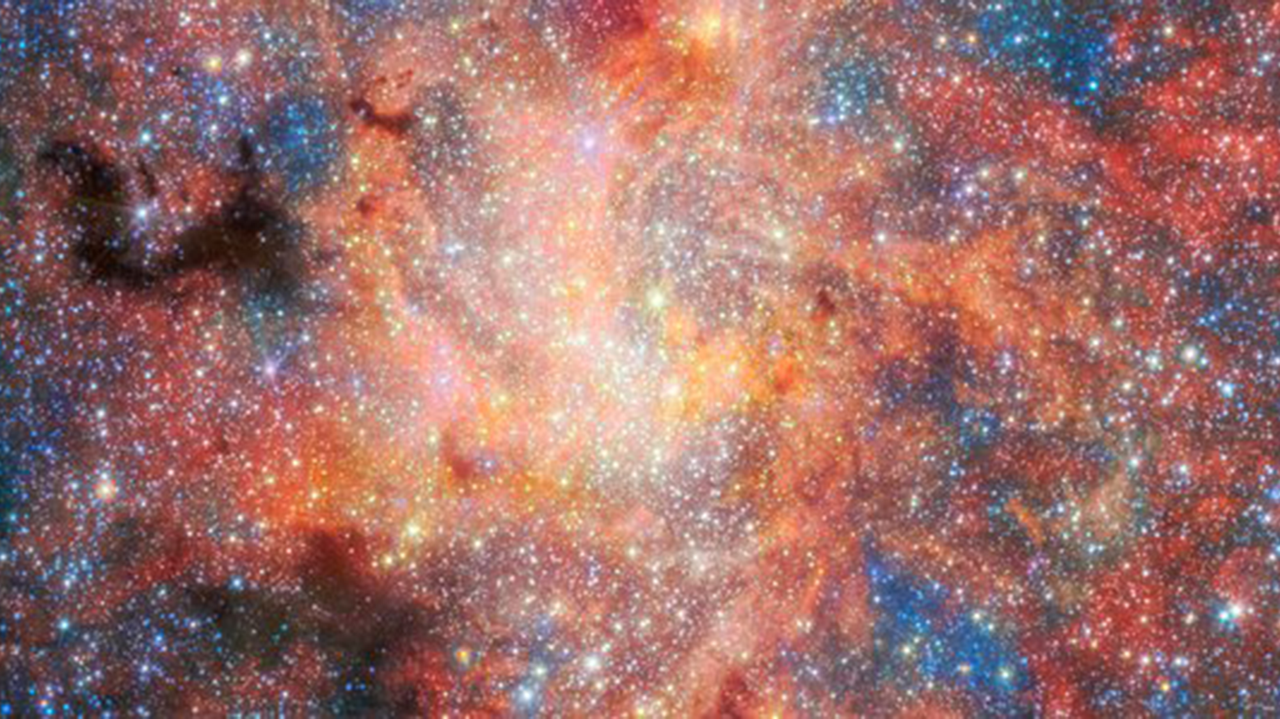
Astronomers have detected dust and water surprisingly close to the Milky Way's central black hole, Sagittarius A*, marking a significant discovery in the study of cosmic environments. This finding came from observations made by the Event Horizon Telescope (EHT) collaboration and was reported in a recent study. The presence of water, just a few light-years from the black hole, challenges previous assumptions about the conditions in such extreme environments.
This discovery is timely as scientists seek to understand the behaviors of evolved stars and the mechanisms that allow certain materials to exist in hostile settings. Sagittarius A* is surrounded by intense gravitational forces and extreme radiation, which typically make it difficult for life-sustaining elements like water to coexist. The findings provide new insights into how these elements can survive and potentially contribute to star formation in the vicinity of a black hole, which is critical for understanding the lifecycle of galaxies.
The researchers utilized advanced imaging techniques to capture this unprecedented view, revealing not only water but also complex dust structures that suggest a dynamic environment. The specific measurements indicate that the water is likely in the form of vapor, which could play a role in the formation of stars and planetary systems. The study emphasizes the resilience of these molecules, opening up new avenues for research into how they influence stellar evolution near supermassive black holes.
Looking ahead, this discovery could reshape our understanding of galactic formation and evolution. As astronomers continue to explore the region around Sagittarius A*, they may uncover more about how black holes influence their surroundings. This research could also have implications for the search for life beyond Earth, as it provides a better understanding of where water—and by extension, the potential for life—might exist in the universe.
Read Full Story at Live Science →