Global fossil-fuel emissions projected to drop 1.2% in 2026 amid Hormuz crisis
Global fossil-fuel emissions are expected to decrease by 1.2% in 2026, the first drop in a decade, due to rising oil prices and supply disruptions from the Strait of Hormuz crisis. This decline, howe…
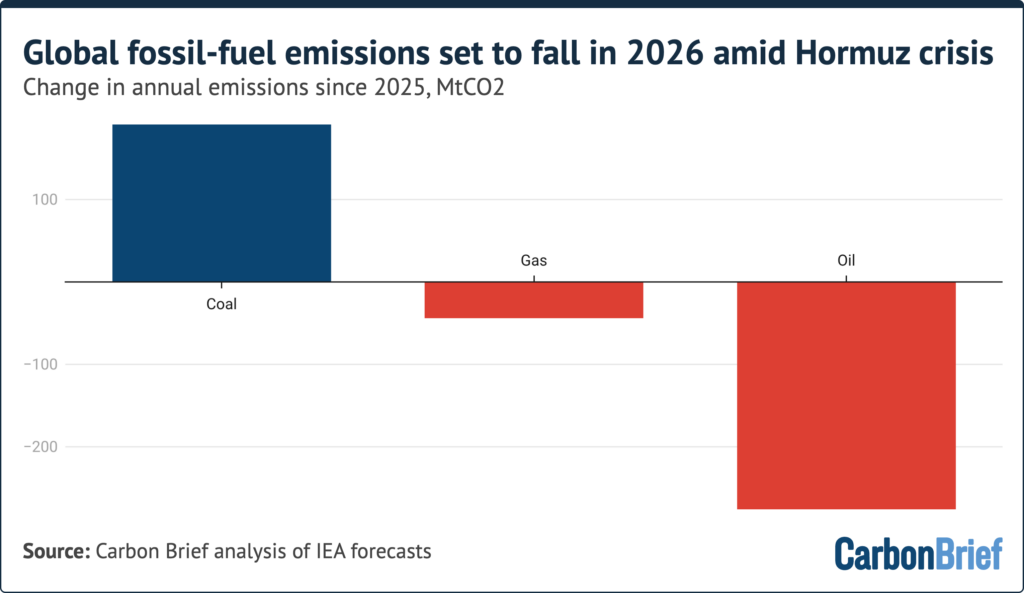
Global fossil‑fuel emissions are projected to decline in 2026, the first drop in a decade, after a sharp rise in oil prices and supply disruptions linked to the escalating crisis in the Strait of Hormuz, analysts said on Tuesday. The International Energy Agency (IEA) estimates a 1.2 percent fall in carbon dioxide output from coal, oil and gas compared with 2025, driven mainly by reduced oil consumption in transport and a slowdown in industrial activity in the Middle East and Asia.
The dip comes as the world grapples with heightened geopolitical tension around the Persian Gulf, where Iran’s recent threats to close the Hormuz shipping lane have forced major oil exporters to reroute vessels and cut output. The uncertainty has pushed oil prices above $100 a barrel, prompting governments and companies to curb demand through fuel‑efficiency measures and a temporary shift to alternative energy sources. At the same time, a surge in renewable‑energy investment and stricter emissions regulations in Europe and China have begun to offset growth in coal use, creating a fragile but noticeable downward pressure on global emissions.
IEA chief Fatih Birol called the forecast “a modest but important step,” noting that the reduction is largely temporary and tied to the geopolitical shock rather than a structural move toward decarbonisation. Environmental groups warned that the decline could be quickly erased if oil flows resume and demand rebounds once the Hormuz dispute eases. Oil majors such as Saudi Aramco and ExxonMobil have signalled plans to increase production later in the year, betting on a return to pre‑crisis market conditions.
If the 2026 dip proves short‑lived, it could still provide a brief window for policymakers to accelerate climate‑friendly policies before emissions climb again. Experts say the episode underscores how vulnerable the global energy system remains to regional conflicts and highlights the need for diversified, low‑carbon energy sources. The coming months will reveal whether the emissions decline marks a turning point or a temporary blip in the fight against climate change.
Read Full Story at Carbon Brief →