NASA confirms 12-kilometer Spider Crater formed by ancient meteorite impact
NASA confirmed the existence of the 12-kilometer Spider Crater in Western Australia, a well-preserved impact site formed by a meteorite strike 2 to 3 million years ago. This discovery is significant …
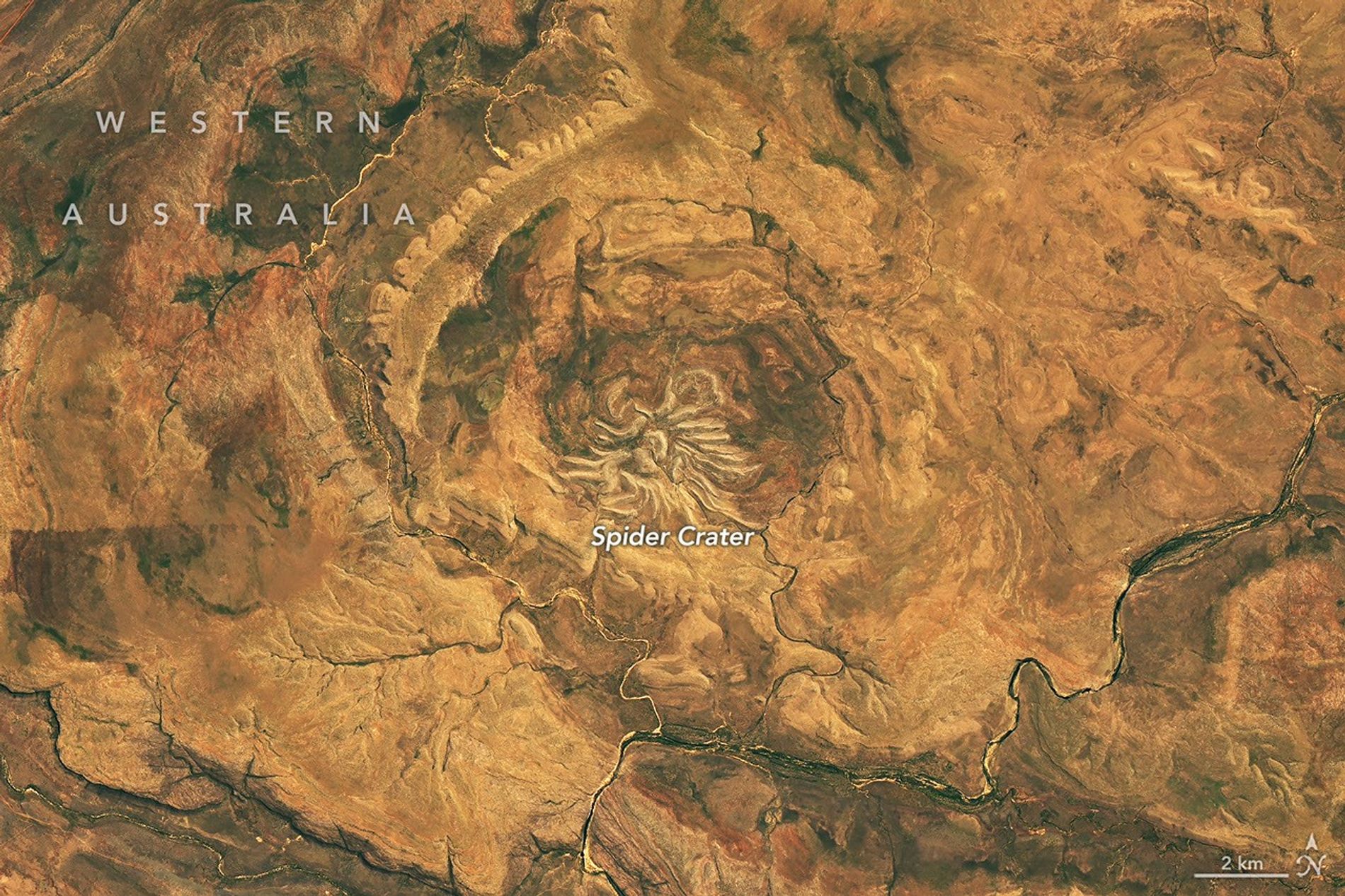
NASA has confirmed the existence of a 12‑kilometre impact crater in Western Australia, dubbed the Spider Crater because its rim resembles a spider’s web. The structure was first spotted by a team of Australian scientists in 2007, but only recently did NASA’s Earth Observatory publish detailed imagery that brought it to international attention. The crater sits near the town of Newman, deep in the Pilbara region, and is one of the few well‑preserved impact sites in the Southern Hemisphere.
The discovery matters because it adds to the record of meteorite strikes that have shaped Earth’s surface. Scientists estimate the impact happened about 2 to 3 million years ago, making it relatively young in geological terms. The size and clarity of the Spider Crater provide a natural laboratory for studying how large rocks break apart when they hit the planet, and how the resulting shock waves reshape the crust. The site also contains a central uplift—a raised area of older rock that juts up from the crater floor—offering clues about the mechanics of impact events.
Researchers used a combination of satellite imagery, seismic surveys, and ground‑based drilling to map the crater’s structure. The data reveal a complex crater with a well‑defined rim, a central peak, and a series of terraces that indicate multiple stages of collapse. The impact is believed to have come from a stony meteorite, about 200 metres in diameter, that released energy equivalent to several hundred megatons of TNT. The event would have vaporised a large area of the surface and likely triggered regional earthquakes, but the region’s remote location means the event left no human record.
Looking ahead, Australian geologists plan to drill deeper into the crater to extract core samples that could shed light on the composition of the meteorite and the state of the Earth’s crust at the time of impact. The site may also be of interest to mining companies, as impact structures can concentrate valuable minerals such as nickel and copper. NASA will continue to monitor the area for any signs of seismic activity that might indicate future geological changes. The Spider Crater reminds scientists and the public alike that Earth’s history is still being written by the space objects that visit it.
Read Full Story at NASA →