Global telescopes observe supernova SN 2023ixf from massive star in Pinwheel Galaxy
A global team of telescopes observed the supernova SN 2023ixf, originating from a star 20 times the sun's size, in the Pinwheel Galaxy on May 19, 2023. This event is crucial for studying massive star…
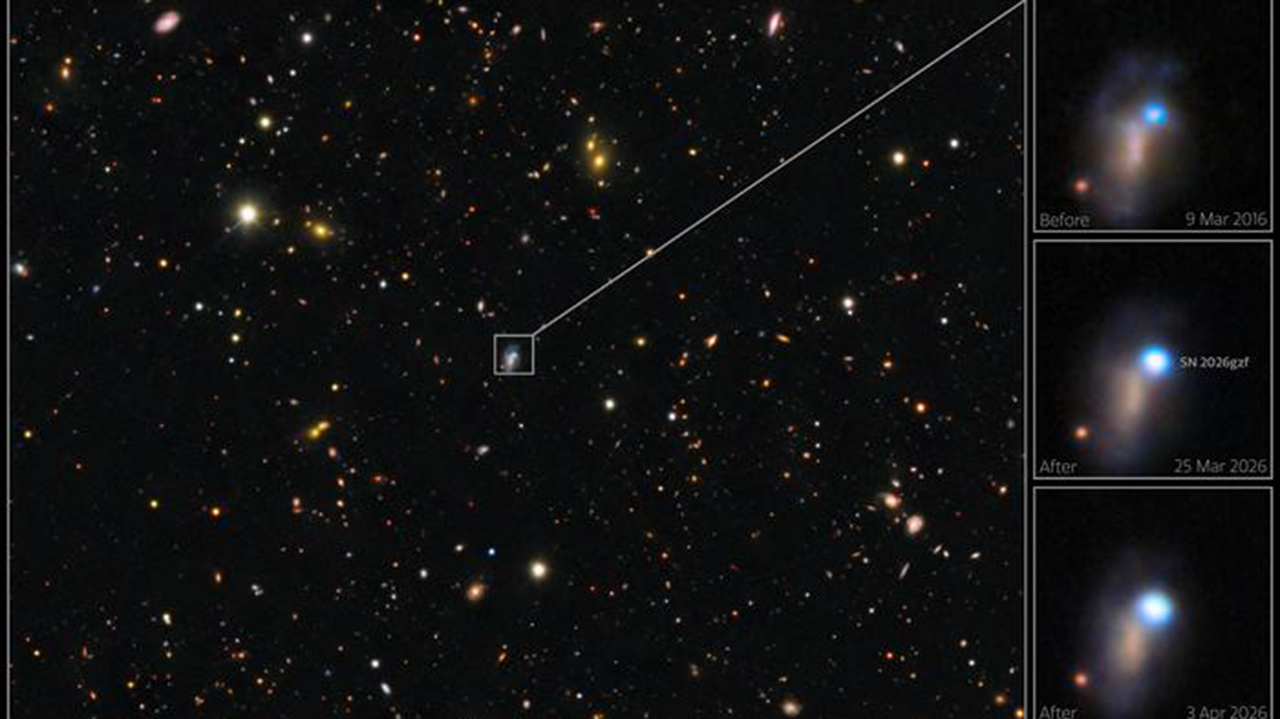
A team of telescopes around the world, including the newly activated Vera C. Rubin Observatory, has successfully observed the first moments of a supernova explosion from a star 20 times the size of the sun. This event, designated SN 2023ixf, was detected on May 19, 2023, in the nearby galaxy M101, also known as the Pinwheel Galaxy. The collaboration marked a significant milestone in astronomical research, bringing together various observatories to capture the explosion in real-time.
This supernova is particularly notable because it represents an opportunity to study the death of massive stars, which contributes significantly to our understanding of the universe. Stars like SN 2023ixf play a crucial role in the life cycle of galaxies, as their explosive deaths can trigger the formation of new stars and distribute heavy elements essential for life. The timing of this observation coincides with advancements in telescope technology, with the Vera C. Rubin Observatory poised to revolutionize how astronomers monitor transient astronomical events.
The collaboration involved several major observatories, including the Hubble Space Telescope and ground-based facilities like the Keck Observatory and the Lick Observatory. Together, they utilized diverse wavelengths of light to gather comprehensive data about the supernova's explosion and the surrounding environment. Early observations indicated that this supernova could be particularly bright and long-lasting, allowing scientists to analyze its spectrum and behavior in detail. Some estimates suggest that it could be visible from Earth for months, providing a rare opportunity for ongoing study.
Looking ahead, the findings from SN 2023ixf could impact multiple fields within astrophysics. Researchers will analyze the data to better understand the processes that govern stellar explosions and the formation of elements like carbon and oxygen, which are vital for life. The collaborative approach demonstrated in this event could also pave the way for future joint observations of cosmic events, enhancing our collective knowledge of the universe and the phenomena that shape it.
Read Full Story at Live Science →