Brazilian fossil reveals 240-million-year-old reptile’s upright walk
*Venatoris gaskillae*, a 240-million-year-old reptile fossil from Brazil, reveals advanced upright locomotion in reptiles before dinosaurs, reshaping early evolutionary history. Its discovery suggest…
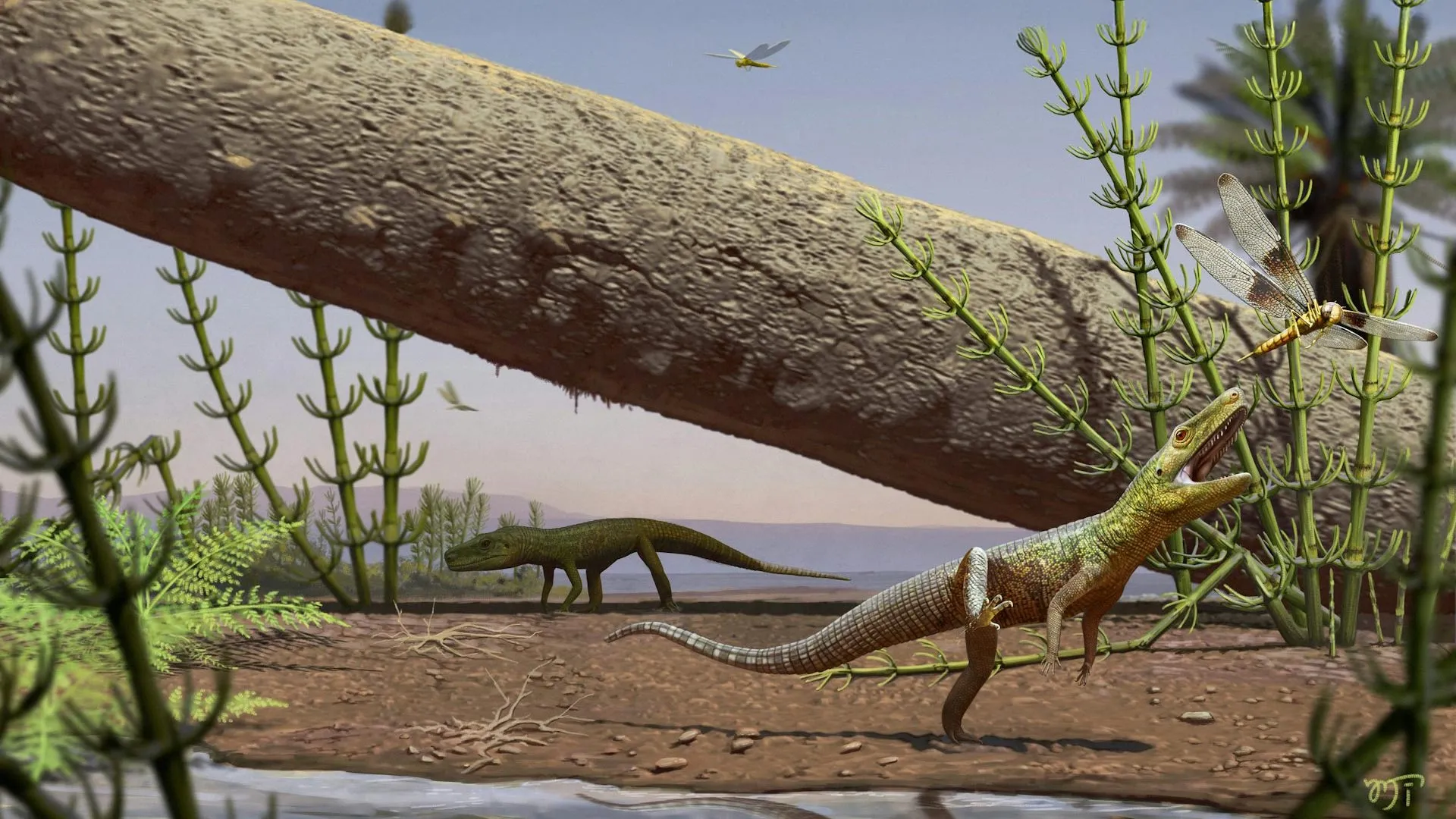
A 240-million-year-old reptile fossil found in southern Brazil is rewriting a key chapter in evolutionary history, revealing what life looked like in the Triassic period just before dinosaurs and crocodiles rose to dominance. The newly identified species, named *Venatoris gaskillae*, was a small, agile predator that walked on legs positioned unusually far forward under its body. Paleontologists say this limb arrangement likely gave it a mobility advantage over earlier reptiles, hinting at how movement evolved before the age of dinosaurs.
The discovery pushes back the timeline of advanced locomotion among reptiles. Most early reptiles had sprawling legs, like modern lizards, which limited speed and stamina. *Venatoris*, however, shows a more upright stance closer to that of later dinosaurs and mammals. Its discovery in Brazil also suggests that these advanced reptiles were more widespread than previously thought. Before this find, close relatives of *Venatoris* were known mostly from fossils in Europe and Africa, indicating that such reptiles roamed across a vast, connected Triassic supercontinent called Pangaea.
The fossil, unearthed in the Paraná Basin near the town of São Jerônimo da Serra, includes a nearly complete skeleton. Researchers say it measures about 1.2 meters long and had sharp teeth for catching prey. Its skull is lightly built, suggesting it hunted small vertebrates or insects. The team, led by paleontologists from the Federal University of Santa Maria and the University of Birmingham, published their findings in the journal *Nature*. They believe *Venatoris* fills a critical gap between early sprawling reptiles and later, more active predators like dinosaurs.
The find matters because it shows that complex body plans and efficient movement emerged multiple times in reptile evolution—long before dinosaurs took over. It also suggests that South America was a hotspot for evolutionary innovation during the Triassic. Scientists now plan to look for more fossils in the region to understand how these reptiles interacted with their environment. This discovery isn’t just about one species; it’s about rewriting the early rules of land vertebrate evolution.
Read Full Story at ScienceDaily →